
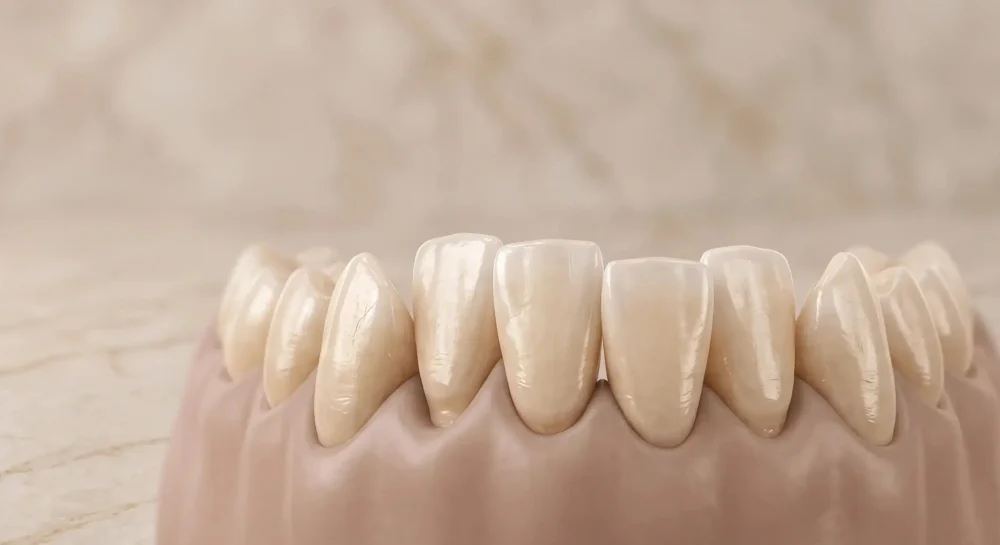
Teeth do not often erupt in a neat row. They overlap, rotate, tilt or emerge inside or outside their space. Teeth compete for room, and often erupt irregularly during childhood. Crowded teeth are the consequence of the space in the dental arch being smaller than the width of all teeth combined. That can happen for one of three reasons:
- Primary crowding is related to genetics.
- Secondary crowding develops because of tooth loss
- Tertiary crowding appears after most teeth have erupted
What Causes Crowded Teeth?
Crowded teeth happen when your jaw is too small to hold all of your teeth in a straight line. Main causes include:
- Genetics
- Early tooth loss: losing a baby tooth too soon
- Delayed loss of baby teeth
- Bad habits: thumb-sucking, pacifier use, tongue thrusting
- Extra or missing teeth
- Natural aging
How Severe Is the Crowding?
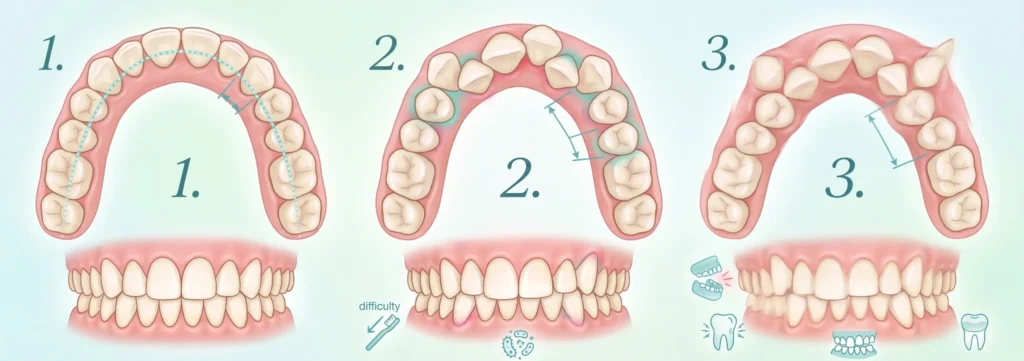
Crowding can be mild, moderate or severe. Orthodontists evaluate these three levels by measuring how much space is missing for the teeth to fit perfectly.
Mild Crowding:
- What it looks like: One or two teeth are slightly rotated or overlapping.
- Measurement: There is less than 3 millimeters of missing space in the jaw.
- Impact: It is mostly a cosmetic issue and rarely affects your bite or speech.
Moderate Crowding:
- What it looks like: Several teeth overlap significantly, or a few teeth are visibly pushed forward or backward out of the natural arch.
- Measurement: There is between 3 and 5 millimeters of missing space.
- Impact: It becomes harder to brush and floss between these teeth, increasing the risk of cavities and gum inflammation.
Severe Crowding:
- What it looks like: Multiple teeth heavily overlap, rotate, or lock behind one another. Some teeth may even grow completely out of alignment (like “flesh” teeth or canines high up in the gums).
- Measurement: There is more than 5 millimeters of missing space.
- Impact: This often causes a misaligned bite (malocclusion), jaw pain, difficulty chewing, rapid tooth wear, and a higher risk of gum disease due to hygiene challenges.
How to Fix Crowded Teeth
The primary way to fix crowded teeth is through orthodontic treatment to expand the jaw or move the teeth into alignment. For severe cases, a combination of extraction and orthodontics is required.
Common Treatments for Crowded Teeth
Treatment | Best For | How It Works |
Clear Aligners (e.g., Invisalign) | Mild to Moderate | A series of removable, clear plastic trays that gradually nudge teeth into place. Highly discreet. |
Traditional Braces | Moderate to Severe | Metal or ceramic brackets glued to teeth and connected by wires. They exert constant pressure to move teeth precisely. |
Palatal Expanders | Children & Teens | A device that gradually widens the upper jaw. It works best before the jaw bones fuse at puberty. |
Interproximal Reduction (IPR) | Mild to Moderate | A dentist gently shaves a fraction of a millimeter of enamel from the sides of crowded teeth to create tiny gaps for movement. |
Tooth Extraction | Severe | Removing one or more teeth (often premolars) to immediately free up space so the remaining teeth can be straightened. |
Veneers or Bonding | Very Mild / Cosmetic | Shaving down a slightly turned tooth and covering it with porcelain. This hides the crowding rather than moving the tooth. |
⚠️ A Warning Against “DIY” Fixes
You should never try to straighten teeth at home using rubber bands, mail-order aligners without direct doctor supervision, or physical force. Doing so can cut off blood supply, damage the roots, and cause permanent tooth loss.
Braces for Crowded Teeth

Braces can align teeth while controlling roots and coordinating the bite. They can be removable and worn only at night, with treatment usually lasting 2 to 3 years, or they can be fixed, which roughly halves the treatment time.
Clear Aligners (Invisalign)
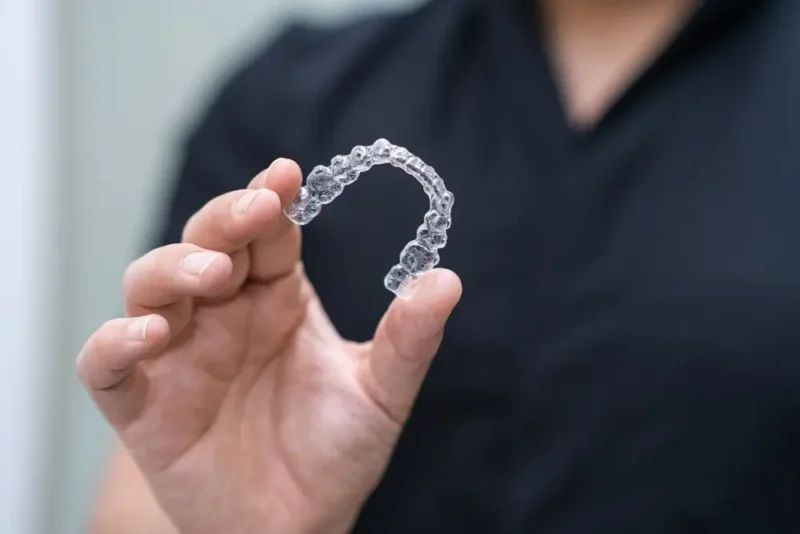
Clear aligners can correct many crowded teeth. Attachments, elastics, expansion of tooth positions or IPR may be incorporated. Invisalign, a transparent removable brace, is the most popular option.
Arch Expansion
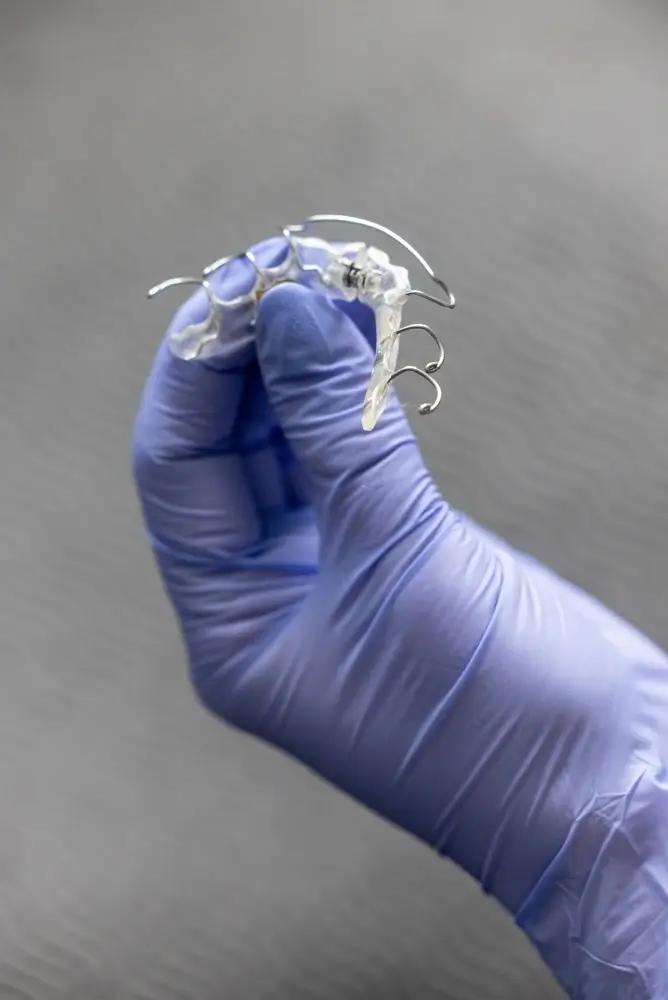
Arch expansion is an orthodontic treatment that widens the upper or lower dental arch to create more room in the mouth.
- Slow expansion: Uses light, steady pressure over a long time to move teeth and remodel bone.
- Rapid expansion: Uses a fixed device with heavy pressure to quickly widen the bone at the middle of the palate, mostly used in younger patients.
Interproximal Reduction (Teeth Shaving)
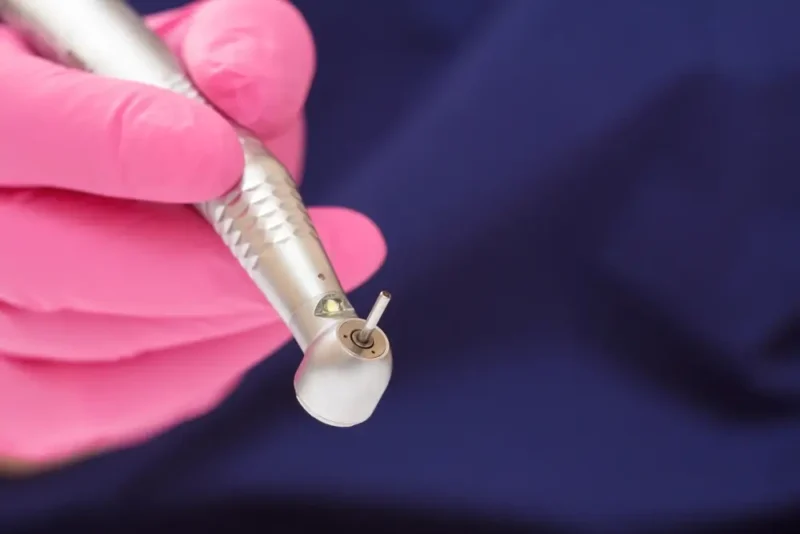
IPR —also known as enamel reduction— creates small amounts of space by reducing enamel between selected teeth. It is often combined with braces or aligners. It cannot solve every moderate or severe space deficiency.
Tooth Extractions
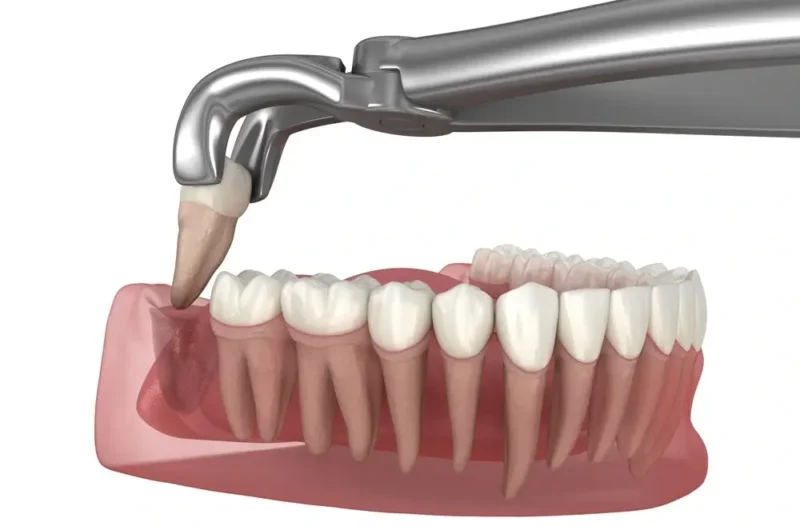
Removing one or more teeth is only considered when severe crowding cannot be resolved safely through other methods. Extraction is neither automatically harmful nor automatically necessary. The orthodontist carefully evaluates the patient before recommending it.
Can Crowded Teeth Be Fixed Without Braces?
Clear aligners are orthodontic appliances and may replace fixed braces in suitable cases. Expansion or interceptive care may help selected children without necessarily eliminating later alignment.
Cosmetic bonding or veneers can disguise small irregularities in carefully selected adults, but they do not create arch space, correct root positions or solve a significant bite problem. Preparing healthy teeth solely to mask crowding may involve irreversible tissue removal. Home aligners, elastic bands and DIY tooth filing can cause uncontrolled movement or damage and should be avoided.
What Happens If Crowded Teeth Are Not Treated?
Mild crowding may be monitored when teeth are healthy, functional and cleanable. Other cases may worsen, complicate cleaning, produce wear or leave a permanent tooth displaced or impacted. Decisions should consider function, hygiene, tissue health, impaction risk, the bite and personal concerns—not appearance alone.
Retainers and their Risks
Teeth can shift after braces or aligners, and natural age-related movement continues. Retainers hold the result while tissues reorganize and help manage long-term change. Depending on the case, a clinician may recommend removable nighttime retainers, bonded retainers or both.
Retention is often long term. A bonded retainer still requires careful cleaning and periodic checks, while a removable one must be worn and replaced when damaged or no longer fitting. If a retainer feels tight or stops seating fully, professional advice is preferable to forcing it.
At What Age Do Crowded Teeth Become Obvious?
Teeth crowding often becomes clearer from ages six to twelve as permanent teeth erupt. Assessment is useful when teeth are blocked, unusually displaced or losing space. An orthodontic check-up around age seven may lead to observation, space management, interceptive care or later treatment—not necessarily immediate braces.
Crowded Teeth in Children Versus Adults
Children and adolescents | Adults |
Growth and tooth eruption may still influence space-management choices | Jaw growth is largely complete, although teeth can still be moved |
Space may sometimes be preserved or recovered before all permanent teeth erupt | Treatment must work within established bone and gum boundaries |
Expansion can produce different effects depending on age and skeletal maturity | Some forms of expansion may be limited or require skeletal or surgical assistance |
Timing may prevent an unerupted tooth from becoming more displaced | Existing fillings, crowns, missing teeth, wear or gum disease may affect planning |
Comprehensive braces or aligners may still be required later | Braces, aligners, IPR and extraction remain possible when individually appropriate |
There is no universal best age. Adults remain candidates when their teeth and supporting tissues are healthy enough.
Can Crowded Teeth Get Worse With Age?
Yes. Lower front teeth commonly become less regular with age, even without previous orthodontics, as arch dimensions, contacts and supporting tissues change.
Corrected crowding may also return. Retainers reduce risk, but no result is maintenance-free. Sudden movement accompanied by recession, mobility, bleeding or pain requires examination for periodontal or other local problems.
Are Crowded Teeth Bad for Oral Health?
Crowded teeth are not a disease, and mildly irregular teeth can remain healthy. Research has not consistently demonstrated that crowding independently causes tooth decay or periodontal disease. Oral hygiene, diet, fluoride exposure, smoking, medical factors and access to professional care may be more influential.
Nevertheless, tight overlaps can make brushing and interdental cleaning more difficult. Plaque may remain in areas that are hard to reach, and irregular contacts can contribute to food trapping. Some people also experience uneven wear or gum irritation. Treatment may make cleaning easier, but straightening teeth does not replace daily plaque control or guarantee freedom from decay and gum disease.