
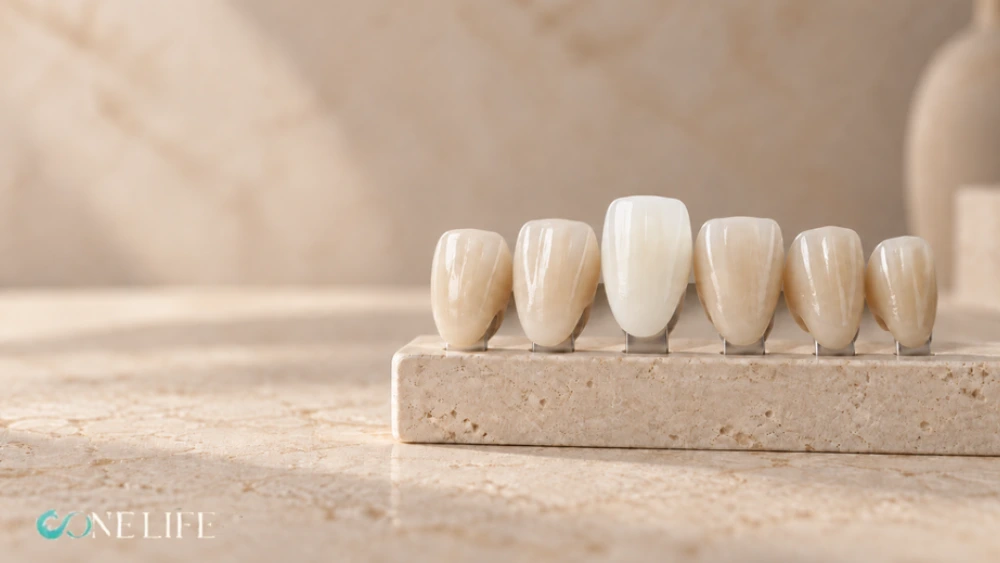
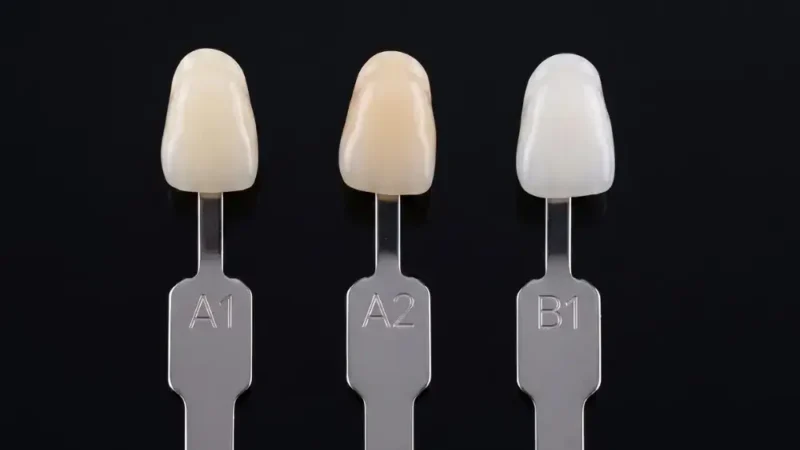
The B1 tooth shade is a bright, clean-looking white that remains within the classical range of natural colors. Rather than icy or blue-white, it looks slightly warm and clean. However, no online photograph can reproduce B1 precisely. This is because its appearance may be affected by:
- Camera exposure and white balance
- Indoor, outdoor or studio lighting
- Screen brightness and color settings
- Image editing and filters
- Reflections from the lips, gums and skin
The B1 tooth shade & the VITA guide
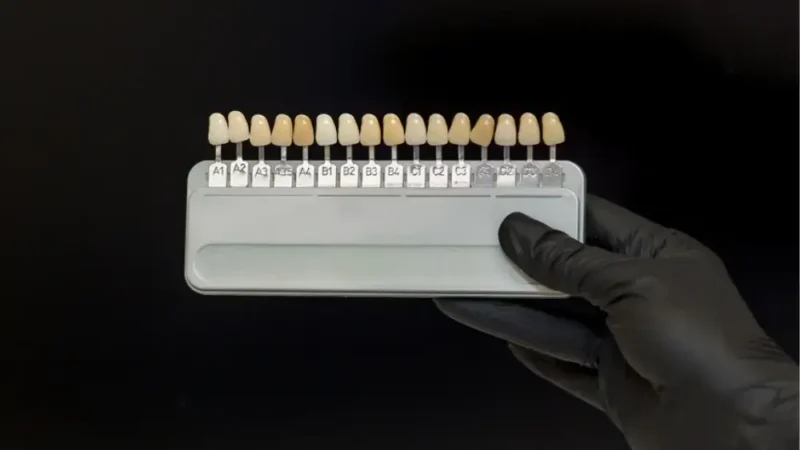
B1 is the brightest of the 16 tooth shades included in the VITA Classical A1–D4 guide. However, B1 is not necessarily the whitest available. Modern systems have bleach shades that are lighter and brighter than the natural range.
The letters in this guide represent four general color families:
Shade family | General color tendency |
A | Reddish-brownish |
B | Reddish-yellowish |
C | Grayish |
D | Reddish-grayish |
These terms describe subtle undertones within natural tooth colors. A B-family tooth does not necessarily look obviously yellow.
Does the B1 tooth shade look natural?
Yes, but not in every mouth. Natural teeth vary in brightness, translucency, light-reflection, texture and color even within the same tooth. To look authentic, dentists must recreate such details. If every tooth has exactly the same color, the smile will just look artificial no matter what.
B1 may look harmonious when:
- Several visible teeth are being restored together.
- The untreated teeth are already relatively light.
- Whitening has created a similar shade in the natural teeth.
- The ceramic retains realistic translucency and surface detail.
- The patient wants a bright result without moving into a bleach shade.
It may appear artificial when:
- A single B1 crown is placed among considerably darker teeth.
- Upper restorations are much lighter than untreated lower teeth.
- The restoration is excessively opaque or reflective.
- The patient wanted only a very subtle change.
- Tooth shapes are too large, square or mechanically uniform.
Is the B1 tooth shade right for you?
B1 may be appropriate if you want a visibly bright smile while remaining within the natural shade range. The decision should be made by viewing the shade in relation to your face and teet.
If you are considering whitening, veneers or crowns, One Life Dental can evaluate your existing tooth color and discuss whether B1 or another shade may better suit you.
Discuss:
- Whether you prefer a subtle, bright or dramatic result
- Which teeth will be treated
- The color of untreated neighboring teeth
- Whether existing restorations require replacement
- How much discoloration must be masked
- The planned material and translucency
- Whether whitening should be completed first
- How provisional restorations look in different lighting
How do dentists select B1?
Visual assessment, photographs, try-ons and patient feedback are necessary for a complete evaluation. Depending on the treatment, shade selection at One Life Dental may involve:
- Cleaning stains or deposits that could distort the assessment.
- Comparing B1 with neighboring shades.
- Evaluating brightness, undertone and color intensity.
- Selecting the shade while the teeth are hydrated.
- Viewing the samples under controlled lighting.
- Taking standardized photographs.
- Using a digital shade-measuring device.
- Communicating a detailed shade map to the laboratory.
- Assessing trial or provisional restorations.
What skin tone does B1 suit?
B1 can complement a wide range of complexions, but there is no scientifically dependable rule assigning it to a particular skin tone.
Complexion can influence perceived contrast. A bright tooth may appear more luminous against darker skin or more understated against a lighter complexion. However, lip color, gum shade, facial contrast, lighting and the amount of tooth visible can be equally important.
Research examining tooth color and complexion has produced population-specific observations rather than a universal formula. Patients should therefore evaluate B1 beside their own face instead of following rigid online skin-tone charts.
How is B1 used in cosmetic dentistry?
Because B1 sits at the brightest edge of the natural VITA range, it often appears in treatments where patients want a clearly noticeable improvement. However, the way it is used, and the precautions it requires, differ from one procedure to another.
B1 Veneers
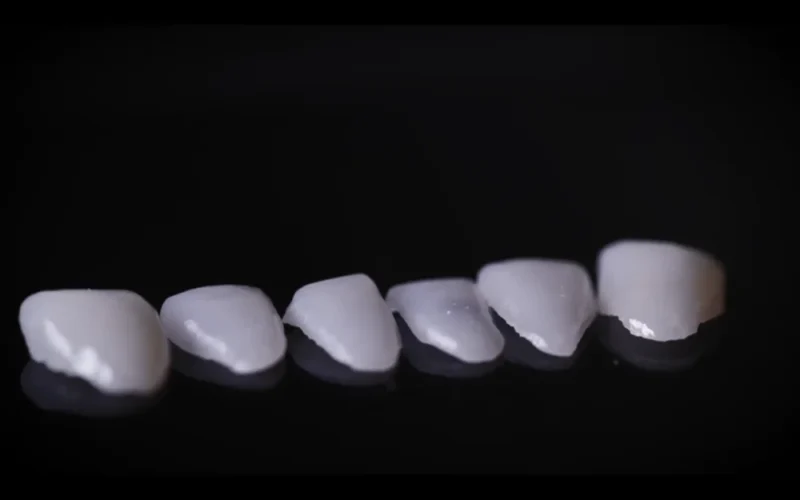
Dental veneers are perhaps the most common way patients receive B1. Because several front teeth are usually treated at once, the bright shade can be distributed evenly across the smile without isolating a single tooth. Still, the dentist must decide how much translucency to retain.
- Frequently chosen for smile makeovers covering most of the visible upper teeth
- Heavily discolored teeth may require more opaque ceramic to maintain B1
- Untreated lower teeth may look darker beside bright upper veneers
- A mock-up can preview B1 before any tooth is prepared
Whitening Toward B1
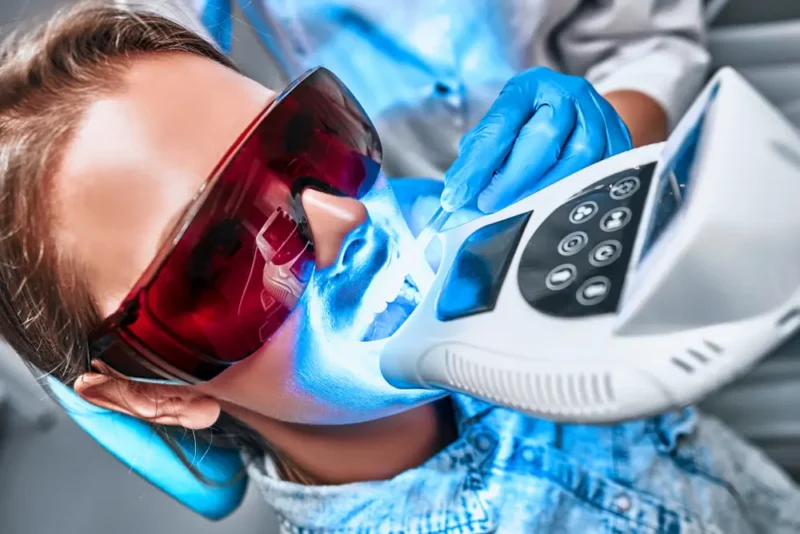
For natural teeth, B1 often represents an ambitious endpoint. It sits at the lightest end of the classical range, so reaching it usually requires a favorable starting shade and discoloration that responds well to bleaching.
- Serves as a useful benchmark when comparing before-and-after shades
- Some teeth may move past B1 into the bleach shade range
- Planned restorations should wait until the whitened color stabilizes
- Periodic touch-up treatments may be needed to preserve the result
B1 Crowns
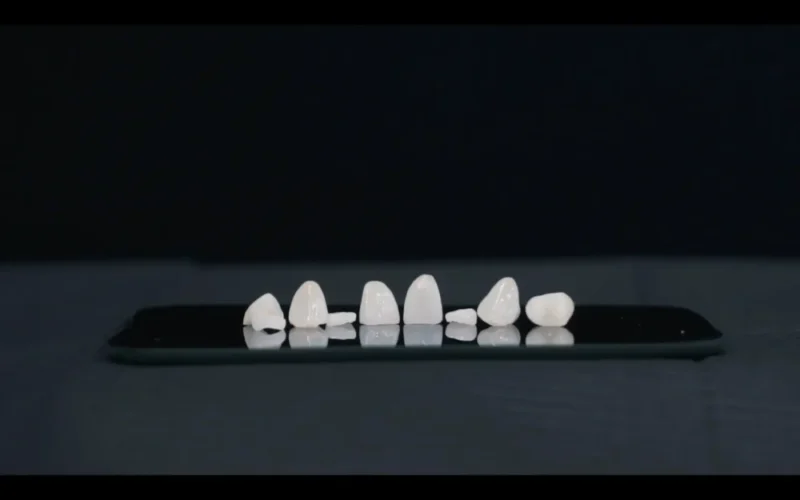
B1 dental crowns can work beautifully when they join other bright restorations or whitened teeth. Placed alone among deeper natural shades, however, it may stand out as the brightest tooth in the smile. For this reason, dentists often reserve B1 crowns for cases where the neighboring teeth are already light or are being treated at the same time.
- Back-tooth crowns allow more flexibility since they are less visible
- Monolithic zirconia may look flatter than layered ceramics in B1
- Laboratories can add gradual color zones for a more lifelike finish
- A provisional crown helps confirm the shade before the final restoration
B1 Composite Bonding
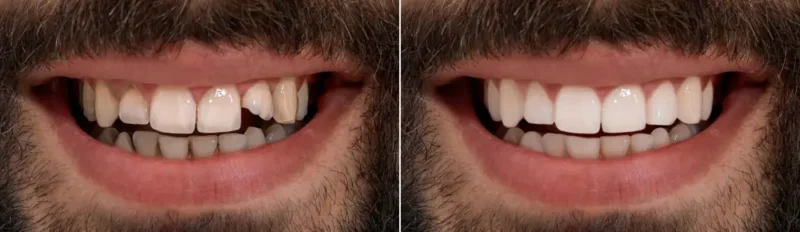
B1 composite is often chosen to repair small chips or edges on teeth that are already bright, especially after whitening. Since bonding is built by hand, the dentist can combine B1 with more translucent enamel shades along the biting edge. This layering helps avoid a chalky appearance, a common risk with very light composite shades.
- Bonding is usually delayed after whitening so the color and bond strength can stabilize
- Manufacturers interpret B1 differently, so a small test sample may be placed first
- Pigmented drinks may dull composite faster than ceramic
- Older bonding may need replacing if surrounding teeth are whitened later
B1 Dental Bridges
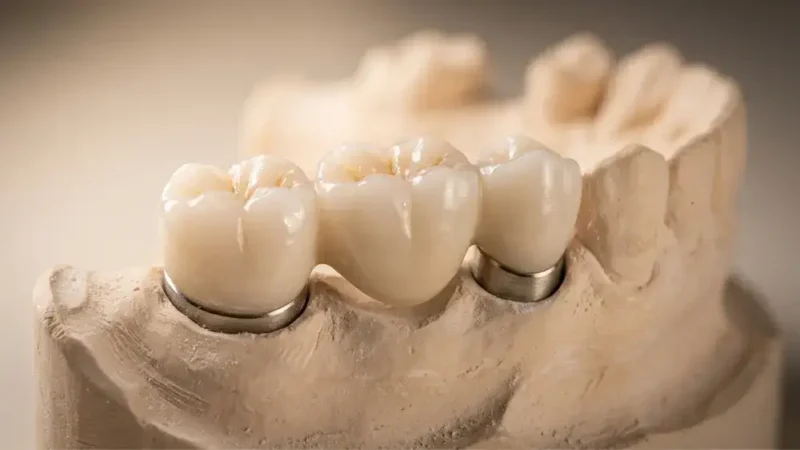
A B1 dental bridge must carry its brightness across multiple connected teeth, including the artificial tooth that sits over the gum. Without careful characterization, that span can resemble a single bright block. Laboratories therefore introduce slight variations in translucency and edge effects so the bridge reads as separate teeth rather than one continuous piece.
- Supporting and neighboring teeth may be whitened first to better match B1
- Gum contours around the replacement tooth affect overall realism
- Metal-based bridges may need extra opacity to hide the framework
- Detailed photographs help the laboratory match nearby teeth
B1 Implant Restorations
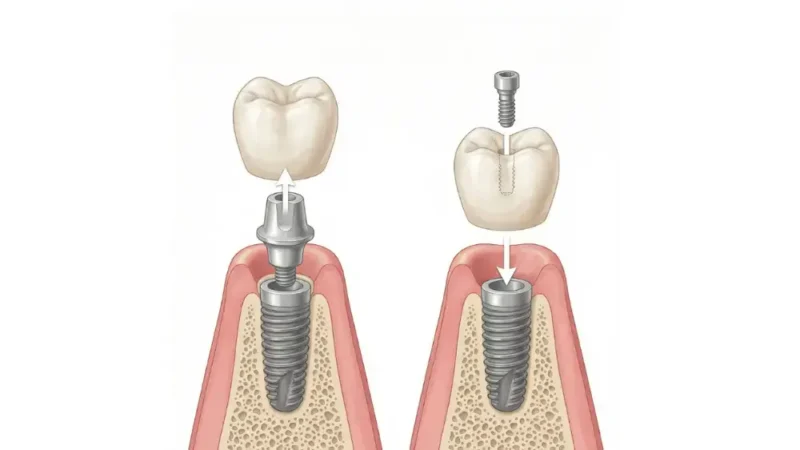
Implant crowns, bridges and overdentures can all be produced in B1. The main challenge lies at the gumline, where the dental implant components may influence how the bright ceramic appears. Near the front of the mouth, dentists often pair B1 restorations with tooth-colored or zirconia implant abutments, helping the restoration keep its brightness without a grayish tint showing through.
- Implant restorations will not respond to whitening later
- Thin gum tissue increases the risk of visible discoloration
- The shade should be chosen after any planned whitening is complete
- Healthy gums around the implant are essential for a natural appearance
B1 Dentures
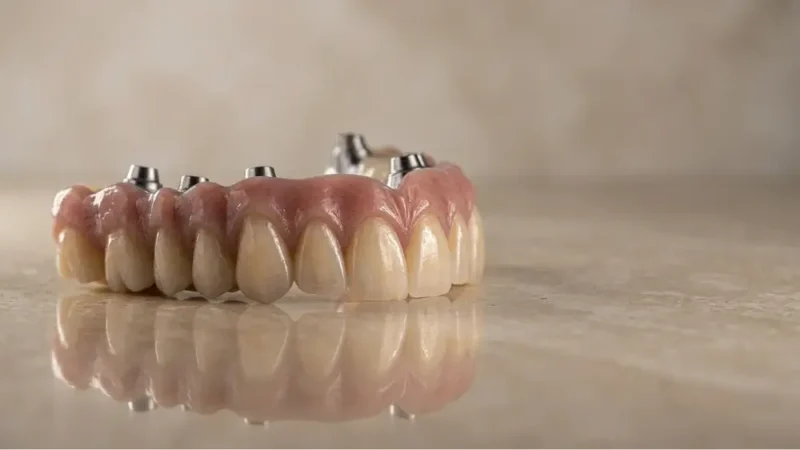
With full dentures, patients can choose B1 freely because no natural teeth need matching. Many are drawn to its fresh look, but an extremely bright denture may appear less natural once combined with uniform shapes and perfect alignment. Dentists may suggest subtle variation in tooth position, shape or shade to make a B1 denture feel convincingly lifelike.
- Partial dentures must match the remaining natural teeth
- A wax try-in lets patients assess B1 against their face and lips
- Acrylic denture teeth may gradually stain and lose their shine
- Daily removal and cleaning help preserve the denture’s color
How long does B1 stay white?
Teeth with B1-like shade can gradually darken again. Coffee, tea, tobacco, strongly pigmented foods and normal aging contribute to color changes. Ceramic veneers and crowns are more resistant to ediscoloration, but they are not maintenance-free. Plaque and stains can accumulate around their margins, while untreated teeth may continue to change color.
To maintain the result:
- Brush twice daily with fluoride toothpaste.
- Clean between the teeth every day.
- Attend regular dental examinations and professional cleanings.
- Avoid tobacco.
- Limit strongly pigmented drinks.
- Avoid abrasive products on veneers and crowns.
- Follow whitening-maintenance instructions.
Can B1 look different after placement?
The finished restoration may not look identical to the shade selected in the dental office because color perception and restorative materials are influenced by multiple factors.
Lighting
A restoration may match under clinical lighting but look slightly warmer, brighter or grayer in daylight or artificial indoor light. Dentists may evaluate shades under controlled or multiple lighting conditions to reduce this effect.
Tooth Dehydration
Teeth temporarily become lighter and more opaque when they remain dry. If the shade is selected after prolonged isolation, the dentist could unintentionally choose a restoration that appears too bright once the natural teeth rehydrate.
Underlying Color
A dark tooth, metal foundation or discolored core can influence translucent ceramic. The material and opacity must be selected according to the amount of masking required.
Material Properties
Zirconia, lithium disilicate, layered porcelain and composite resin reflect and transmit light differently. The same B1 designation may not appear identical across all materials.
Surface Finish
A highly polished or glossy restoration may reflect more light and appear brighter. Texture can soften reflection and create a more natural appearance.
Can natural teeth be whitened to B1?
Professional whitening may help some natural teeth approach B1, but no particular shade can be guaranteed beforehand. Teeth may finish darker than B1, close to B1 or lighter than B1 following successful whitening.
This is because yellowish staining may respond differently from gray discoloration, fluorosis or tetracycline-related staining. A tooth that has darkened after trauma or root canal treatment may also require a different approach.
The outcome depends on:
- Starting tooth color
- Type and depth of discoloration
- Enamel thickness and translucency
- Age-related changes
- Previous dental treatment
- Whitening method
- Individual biological response