
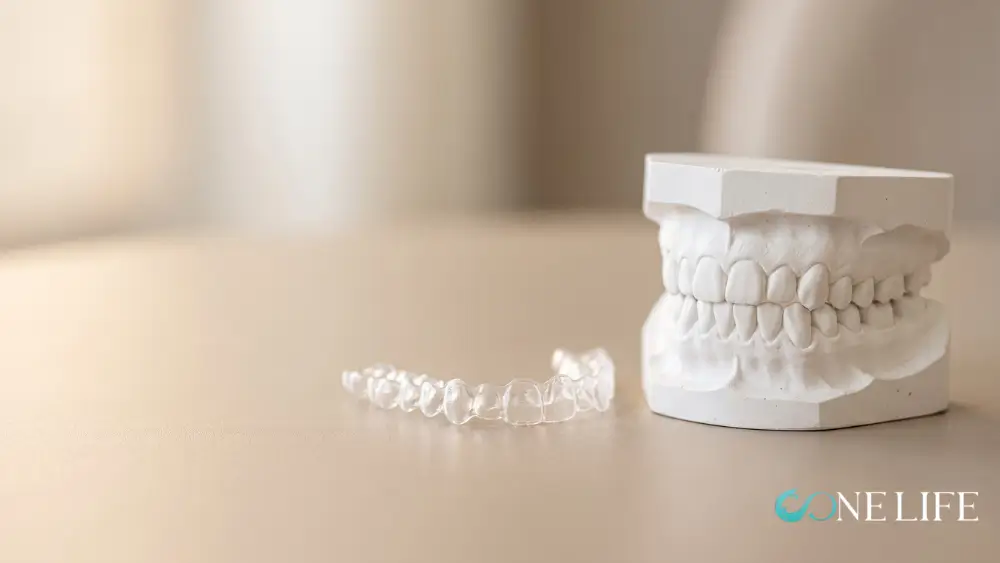
Crooked teeth are teeth that overlap, rotate, lean forwards or backwards, or erupt outside their expected position. These changes can be mild and only be of aesthetic concern, or they can make cleaning and everyday chewing (or even talking) more difficult.
Crooked teeth are common and do not indicate poor care. They usually reflect inherited features, tooth size, available space, dental development and other influences. Let’s take a look at all the important details below.
What causes crooked teeth?
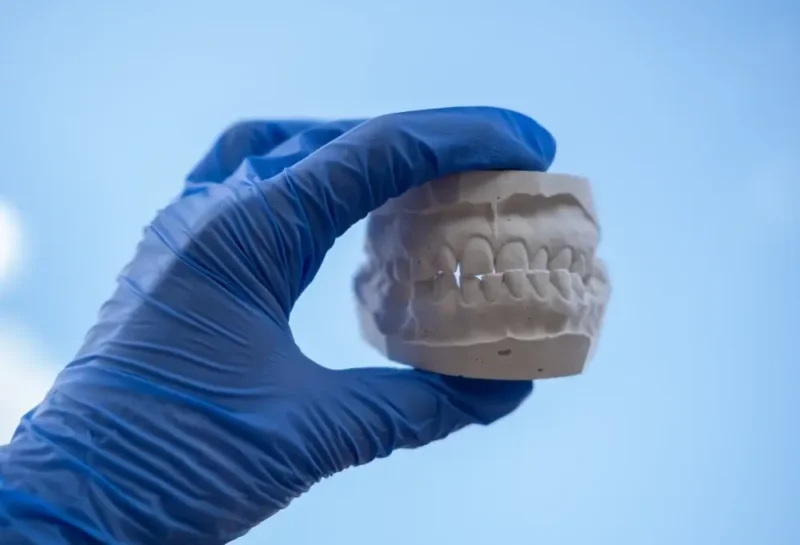
Teeth usually become crooked when their size or eruption does not correspond with the available space in the jaw. We can divide crooked teeth in 5 main causes:
1. Genetics and jaw development
Jaw and tooth types often run in families. Large teeth or a small jaw can leave insufficient room, causing adult teeth to overlap, twist or erupt outside the arch. Inheritance creates a tendency.
2. Childhood habits and oral function
Prolonged thumb sucking, extended dummy or pacifier use, tongue thrusting and some mouth-breathing patterns may affect developing teeth.
3. Early or delayed loss of baby teeth
Baby teeth preserve space for adult teeth. Early tooth loss can let neighbouring teeth drift into the gap, or an unfallen baby tooth can obstruct normal eruption.
4. Injury, gum disease and tooth movement
Injury can affect a tooth’s position, shape or development. Gum and bone changes, missing teeth, ageing and habits like smoking or alcohol can cause later movement.
Which teeth are most likely to become crooked?
The truth is any tooth can be affected. Lower incisors are particularly prone to crowding, while upper canines can erupt high or remain impacted. Wisdom teeth frequently erupt at an angle but are assessed separately.
Teeth or area | Common crooked-tooth pattern | Usual assessment stage* |
Upper front teeth | Rotation, protrusion or one tooth overlapping another | From age 7; treatment timing varies |
Lower front teeth | Crowding, twisting and gradual overlap | From age 7 and throughout adulthood |
Upper canines or “eye teeth” | High eruption, displacement or impaction | Position checked around 9–11; usual eruption around 11–13 |
Premolars | Rotation or blocked eruption where space is limited | Commonly assessed around 10–13 |
Wisdom teeth | Angled, partial or fully impacted eruption | Usually assessed in the late teens or adulthood |
Can crooked teeth affect oral health?
Mildly crooked teeth cause no health problems. But they can be difficult to clean, allowing plaque to accumulate and increasing the risk of decay or gum inflammation. Friction can also cause wear, sensitivity or chipping. A medical assessment will consider cleaning access, gum health, function and patient concerns, not appearance alone.
What is the best age to straighten crooked teeth?
The American Association of Orthodontists recommends an initial check by age seven. At this stage, a child usually has both baby and adult teeth, allowing crowding, abnormal eruption and space problems to be recognised early.
Most seven-year-olds do not need immediate braces. Selected cases may benefit from early action to preserve space or reduce impact risk.
Straightening often begins around 10–14. A children’s orthodontic assessment can establish appropriate timing.
Can teenagers and adults fix crooked teeth?
Teenagers commonly have treatment with fixed metal braces, ceramic braces or clear aligners. Fixed braces work continuously and can control a broad range of tooth movements. Clear aligners are removable and discreet, but they generally need to be worn for around 20–22 hours each day.
Adults can also straighten crooked teeth. Healthy teeth can move at almost any age, although fillings, crowns, implants, missing teeth or gum disease may require additional planning. Adult orthodontic treatment may take several months for limited movement or considerably longer when many teeth require correction.
How to fix crooked teeth
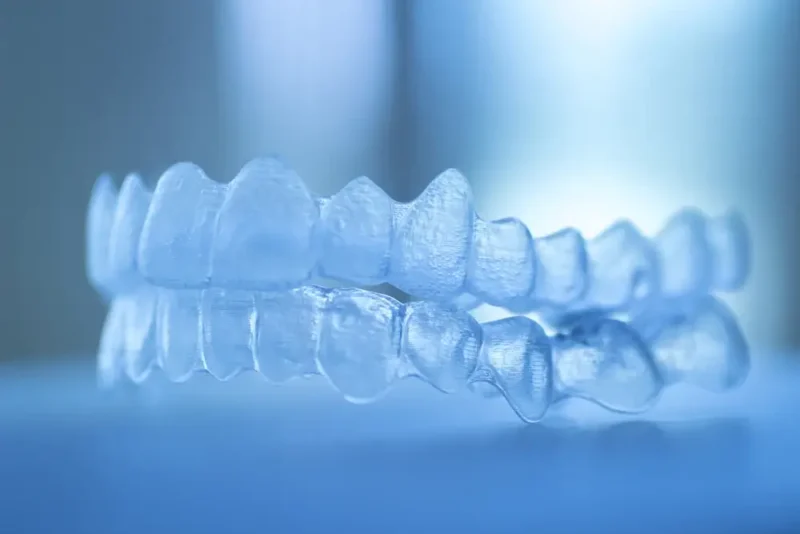
Bonding or veneers can disguise a very small irregularity by changing the visible shape of a tooth, but they do not move its root. The most common orthodontic treatments for crooked teeth include:
- Fixed braces: Brackets and wires apply controlled forces to move teeth. Metal braces are highly versatile, while tooth-coloured ceramic brackets provide a less noticeable alternative.
- Clear aligners: A planned series of removable trays gradually repositions the teeth. Suitability depends on the movements required and the patient’s ability to wear them consistently.
- Space management: Growing patients may sometimes need an appliance to preserve or create space. In other cases, selective tooth removal may be considered after a complete examination.
- Combined care: Impacted teeth, gum problems or restorations may require several dental specialists.
Why are retainers necessary?
Teeth naturally tend to move after active treatment. A removable retainer, a thin fixed wire behind the teeth or a combination of both helps preserve the new positions. Many patients require long-term or lifelong night-time wear. A lost, damaged or tight retainer should be assessed before small changes become more difficult to correct.
Can Crooked Teeth Be Improved with Cosmetic Treatments?
For adults looking for a faster cosmetic alternative to braces or aligners, a dentist may recommend tooth-coloured restorations made from porcelain, ceramic, zirconia or composite material. These can create a more balanced shape, colour and visible arrangement.
Cosmetic treatment can often be organised within a planned visit. However, these procedures improve the appearance of crooked teeth rather than moving their roots. Some options also require permanent reshaping of the natural tooth, so the most suitable approach should be selected only after examining the teeth, gums and bite.
What does scientific research say?
Scientific research describes dental crowding as common, multifactorial and strongly influenced by available arch space. A review indexed by the US National Library of Medicine identifies crowding as one of the most frequent orthodontic problems and notes its hereditary tendency. A population study available through PubMed found no clear overall difference between the sexes, although some individual dental traits varied. NHS guidance confirms that braces are commonly recommended after the adult teeth emerge and that adults can also receive treatment. These sources support individual diagnosis rather than assumptions based only on appearance, age or sex.