86% of UK dentists say they’ve treated complications from dental work done abroad. Yet look online and you find thousands of Britons who paid a third of the price in Turkey with zero complications. Which one is true?
Getting dental implants in Turkey vs the UK is a bet that only pays off if you know exactly what you’re buying: the right certifications, the right questions, and the red flags that separate world-class clinics from risky bargains.
Let’s take a close look at costs, what influences prices and safety. In a nutshell:
- A single premium-brand implant costs £2,000–£6,300 in the UK vs £500–£1,100 in Turkey (the same Straumann or Nobel Biocare)
- The price gap comes from lower overheads, government incentives and bulk purchasing (the implant itself is identical worldwide)
- Safety is verifiable: demand Ministry of Health certification in Turkey, ISO 9001, Temos accreditation, REF/LOT implant codes and a maxillofacial surgeon (not a general dentist)
How Much Do Dental Implants Cost in Turkey vs the UK?
A single dental implant costs £2,000–£6,300 in the UK and £500–£1,100 in Turkey, all-inclusive. For full-mouth restorations, the gap widens even more. The same full mouth dental implants that cost £30,000–£45,000 in London cost£5,000–£12,000 in Istanbul. That’s including accommodation, private transfers and, usually, all expenses other than food and leisure.
The table below compares typical 2026 prices in GBP for premium implant brands (Straumann, Nobel Biocare, Bego):
Treatment | UK (Premium Brand) | Turkey (Top-Tier Clinic) | Typical Saving |
Single implant (complete) | £2,000 – £6,300 | £500 – £1,100 | up to 83% |
All-on-4 (per arch) | £12,000 – £18,000 | £2,450 – £4,500 | ~70% |
All-on-6 (per arch) | £16,000 – £22,000 | £3,150 – £5,500 | ~72% |
Full mouth (both arches) | £30,000 – £45,000+ | £4,950 – £12,000 | ~75% |
Crucially, UK quotes are usually itemised (fixture, abutment, crown, surgeon’s fee and CBCT scans billed separately)while Turkish packages bundle everything, including accommodation. Always compare total treatment cost, never the implant alone.
Licences and Certifications a Safe Turkish Clinic Must Have
A safe Turkish clinic is a verifiable paper trail. Four credentials form the baseline, and every one of them can be checked before you spend a pound on flights.
The legal foundation is the Turkish Ministry of Health licence. To operate legally — and to treat international patients — a clinic must hold the Health Tourism Authorization Certificate, which subjects it to strict sterilisation protocols and unannounced government inspections. Every legal clinic has a unique authorisation code; ask for it, and cross-check it. On top of the licence, the Turkish Dental Association (TDB) regulates members’ ethics and pricing.
Beyond the legal minimum, the certifications that separate tiers are voluntary international audits:
Certification | Who Issues It | What It Actually Guarantees |
Ministry of Health licence | Turkish government | Legal operation, sterilisation standards, surprise inspections |
Health Tourism Authorization | Turkish government | Clinic is legally allowed to treat international patients |
ISO 9001 | Independent auditors | Every process is documented and repeatable — minimising human error |
Temos | Independent auditors (medical travel) | Transparent pre-op plans, aftercare protocols for when you’re back home, informed consent in your language |
Temos deserves special attention for British patients: unlike general health certifications, it audits the international patient journey specifically, including continuity of care after you return to the UK.
Why Your Surgeon Matters More Than Your Clinic
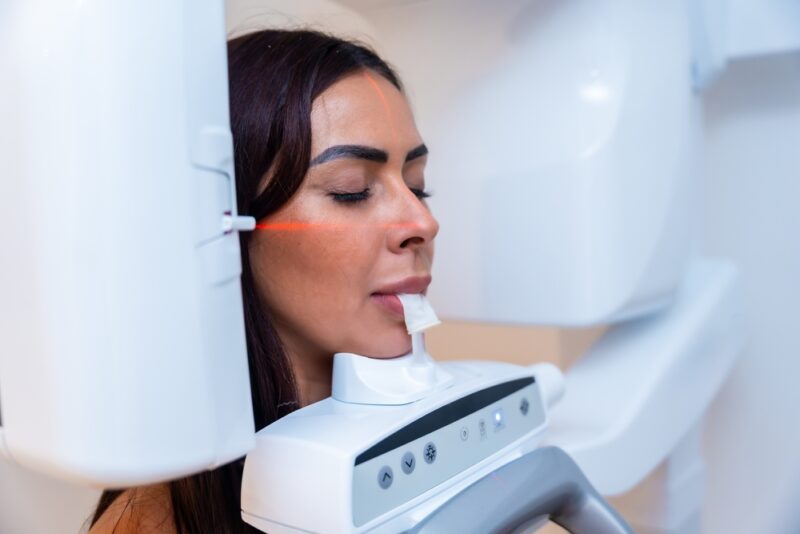
In Turkey, a general dentist can legally place implants. That’s something extremely important to keep in mind. Yet, the absolute best professional to perform dental implant surgery is no ordinary dentist, but an oral & maxillofacial surgeon.
An oral and maxillofacial surgeon is a specialist with 4–6 years of hospital-based surgical residency beyond dental school. The difference in their preparation is notable:
- Complex anatomy: they are trained for low bone density, sinus proximity and advanced bone grafting, the exact scenarios where implants fail.
- Complication management: if something goes wrong mid-surgery, they are qualified to handle it on the spot.
- Exclusive procedures: only maxillofacial surgeons may perform zygomatic implants, the last-resort solution for severe bone loss.
How to Verify Your Implant Is Authentic Swiss
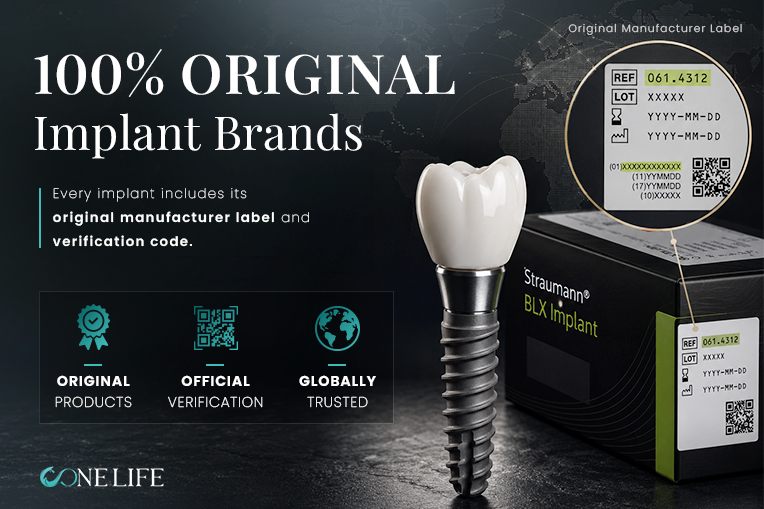
One of the biggest risks of budget dental tourism is counterfeit implants sold as Swiss brands. At One Life Dental weprovide REF codes to give our patients the certainty of receiving only top quality implants. That is why we insist on our 4-step process to verify you are getting the best dental implants in Turkey (Swiss Straumann and Nobel Biocare):
- Demand the original sealed manufacturer packaging: never accept an implant presented loose
- Locate the REF code and LOT number printed on that packaging
- Verify both codes on the manufacturer’s official website (Straumann and Nobel Biocare offer online verification)
- Keep your Implant Passport: the document listing brand, REF and LOT for every fixture
Why Are Dental Implants So Cheap in Turkey?
The implant is not cheaper, actually. Only the country is. A sealed Straumann fixture leaves the same Swiss factory whether it’s destined for London or Istanbul. What changes is everything around it:
- Operating costs: rent, salaries, utilities and lab fees
- Government incentives: Turkey treats medical tourism as a strategic industry, with lower taxation and reduced import duties on medical materials
- Volume purchasing: high-throughput clinics buy hundreds of premium implants at once, securing bulk discounts no UK practice can match
The Big Catch: Two Trips to Turkey
Implant treatment typically means two trips to Turkey, 3–6 months apart: one for placement, one for the final restoration. Budget for return flights (£150–£400 per trip) and travel insurance with dental cover, which standard policies rarely include.
Even so, the arithmetic holds. Full mouth dental implant package deals in Turkey already include hotel accommodation and VIP transfers, so a full-mouth patient adding ~£800 in flights still saves £20,000 or more against UK prices. Where the calculation collapses is complications: correction work in the UK ranges from £500 to over £5,000, and the NHS will not repair elective work done abroad.
Are Dental Implants in Turkey as Good as in the UK?
Yes, when the clinic is top-tier, the clinical outcome is statistically identical. Your jawbone cannot tell whether a Grade 5 titanium fixture was placed in Manchester or Istanbul. What varies is the quality of the surgeon, the imaging, the sterilisation and the materials around that fixture.
The question is never “is Turkey safe?” but “which Turkey am I buying?” There are two distinct markets: a regulated, Ministry of Health-certified tier performing at European standards, and a budget tier cutting corners on materials, imaging and surgical expertise.
- The certified tier: Ministry of Health-licensed clinics using premium Swiss and German implant systems, 3D CBCT planning and specialist surgeons
- The budget tier: high-volume “dental mills” using generic fixtures, basic panoramic X-rays and general dentists (the source of nearly every viral horror story).
Success Rates Compared: Turkey vs UK
Modern dental implants carry a documented 95–98% success rate over 10 years in healthy patients. Against that global benchmark, set by the International Team for Implantology (ITI), here is how the market actually performs:
Provider Type | Typical Surgeon | Implant Brands | 10-Year Success Rate |
Top-tier Turkish clinic | Maxillofacial surgeon | Straumann / Nobel Biocare | 95 – 97% |
UK private practice | Specialist / general dentist | Various premium | 95 – 97% |
Budget Turkish clinic | General dentist | Generic / unbranded | 85 – 90% |
One more marker of honesty: be wary of any clinic claiming a 100% success rate. Complications occur even in the world’s best hospitals. Ethical providers disclose their rates in writing and clearly state the measures they take should it be your case.
What Are the Real Risks of Getting Dental Implants in Turkey?
The British Dental Association surveyed roughly 1,000 UK dentists: 95% had examined patients treated abroad, and 86% had treated complications from overseas work. That figure is real, but it measures dentists who have ever seen at least one complication in their career, not a failure rate of overseas treatment. Patients whose implants succeed don’t book an appointment to say so.
What the BDA data does prove is that failures are expensive: two-thirds of remedial cases cost patients at least £500, and one in five exceeded £5,000, with the NHS generally unable to repair elective work done abroad. The lesson is not “don’t go.” The real risks are choosing the wrong clinic and doctor, not the wrong country.
The 3 Complications That Can Actually Happen
- Early implant failure (first 3–6 months). The implant never fuses with the bone. Prevention: 3D CBCT planning, computer-guided surgery and a strict healing protocol — plus a written warranty covering free replacement.
- Peri-implantitis (years later). The leading cause of long-term implant loss: a bacterial infection that quietly destroys the bone around the fixture. Prevention: Class B autoclave sterilisation, screw-retained restorations that allow deep professional cleaning, and disciplined aftercare (the latter is a shared responsibility).
- Nerve damage. The most feared: permanent numbness or tingling in the lip, chin or jaw when an implant is placed too close to the inferior alveolar nerve. It is almost always a planning failure. Prevention: 3D nerve mapping before the first incision. A surgeon using only a 2D panoramic X-ray is guessing where your nerve is.
Red Flags: How to Spot a Dental Mill
If you see any of these, the chances of it being an unprofessional clinic rise dramatically:
- Packages priced ~70% below the Istanbul market average
- Vague answers about implant brands, no REF/LOT codes, no Implant Passport
- A general dentist performing surgery (not a maxillofacial surgeon)
- No CBCT scanner on-site
- A 100% success rate claim or refusal to discuss complications in writing
- Pressure tactics such as “offer expires today”
Turkey vs UK Dental Implants: Side-by-Side
After taking everything into consideration, we come to the realization that the decision of undergoing dental implants in Turkey vs the UK comes down to seven factors. On cost, Turkey wins overwhelmingly; on convenience and legal simplicity, the UK wins; on clinical quality, a certified Turkish clinic is a draw.
Factor | UK | Turkey (Top-Tier Clinic) |
Cost (single implant) | £2,000 – £6,300 | £500 – £1,100 |
Cost (full mouth) | £30,000 – £45,000+ | £4,950 – £12,000 |
Implant brands | Straumann, Nobel Biocare | Identical (verifiable via REF codes) |
Success rate | 95 – 97% | 95 – 97% (certified tier) |
Regulation | GDC, CQC | Ministry of Health + ISO/Temos |
Aftercare | Local, immediate, lifelong | Excellent during treatment; follow-up requires planning (Implant Passport, warranty, UK-based check-ups) |
Legal recourse | Straightforward under UK law | More complex across jurisdictions (written warranties are essential) |
Timeline | Spread over months, many visits | Compressed into two trips of 5–7 days, 3–6 months apart |
Who Should Stay in the UK & Who Should Fly
In the spirit of the transparency this guide demands from clinics, here is the same honesty applied to you.
Staying in the UK makes more sense if:
- You need a single implant
- You have complex medical conditions (uncontrolled diabetes, immune disorders, medications affecting bone healing) that demand tight care with your GP and specialists.
- You cannot commit to travelling twice
- Immediate, walk-in access to your surgeon during healing is non-negotiable for you
Flying to Turkey makes compelling sense if:
- You need multiple implants or full-mouth restoration (this is where savings reach £20,000–£30,000)
- You have untreated tooth loss and accelerating bone atrophy
- You can verify certifications, demand a maxillofacial surgeon and insist on REF-coded premium implants