
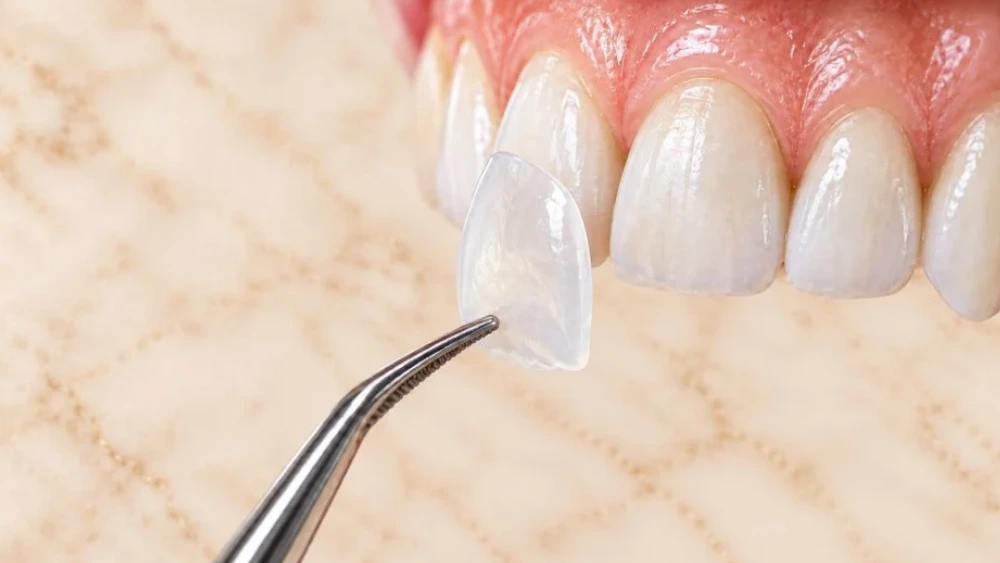
Emax veneers in Turkey offer custom-made lithium disilicate for improving tooth color, shape, and proportions. They are bonded to the visible surfaces of teeth, preserving more tooth than a crown requires.
At One Life Dental, we combine clinical assessment, digital smile design, and laboratory resources to plan around your teeth and smile goals.
Key takeaways:
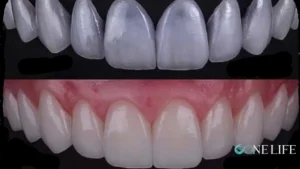
The photos show real One Life Dental patients treated with IPS e.max veneers. Look closely at the details of how the edges follow the lower lip, how light passes through the ceramic, how the veneers sit against the gums. These are the signs of individually planned veneers, not a standard applied to every patient.
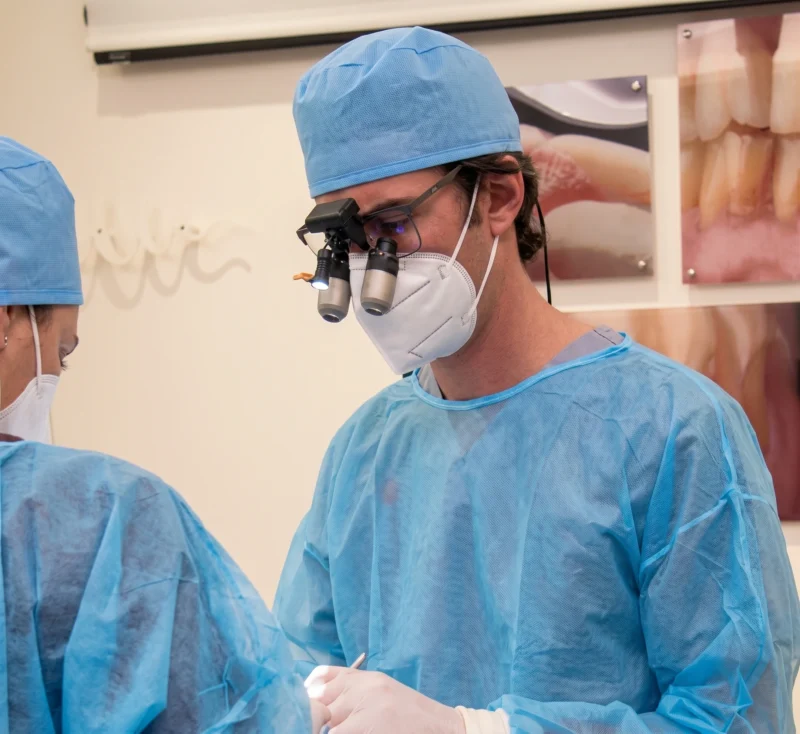
Dr. Víctor Astolfi treats One Life Dental’s Emax veneer patients. As an experienced ITI member and Columbia University scholar, we consider him the best dentist for Emax veneers in Turkey.
Dr. Astolfi brings together the skills that decide how a veneer case turns out:
An Emax veneer is a thin ceramic bonded to the front of a tooth. The material is lithium disilicate glass-ceramic. Crystals reinforce its glass core, allowing light transmission while simultaneously masking the tooth.
Dental veneers in Turkey therefore change the visible surface of your teeth. At One Life Dental, “Emax” exclusively refers to Ivoclar’s IPS e.max product system.
There are two main types of emax veneers and most patients have no idea during consultation. Both differ significantly in manufacturing, however, their production alone does not determine the final quality. Doctor skill and technique is equally important.
Feature | IPS e.max CAD | IPS e.max Press |
Starting material | Ceramic block | Ceramic ingot |
Manufacturing | Computer-guided milling | Heat-pressing in the laboratory |
Processing | Crystallization after milling | Pressing followed by finishing |
Esthetic finishing | Characterization, glazing or polishing, and optional layering | Characterization, glazing or polishing, and optional layering |
Treatment for emax veneers in Turkey moves through assessment, design, preparation, fabrication, and placement. Below, we find the step by step protocol just as it unfolds at One Life Dental for international patients.
Our doctors review your medical and dental history and examine your teeth, gums, and bite. Photographs, scans, and radiographs support diagnosis and planning. A CBCT scan is not an automatic requirement for routine veneers.
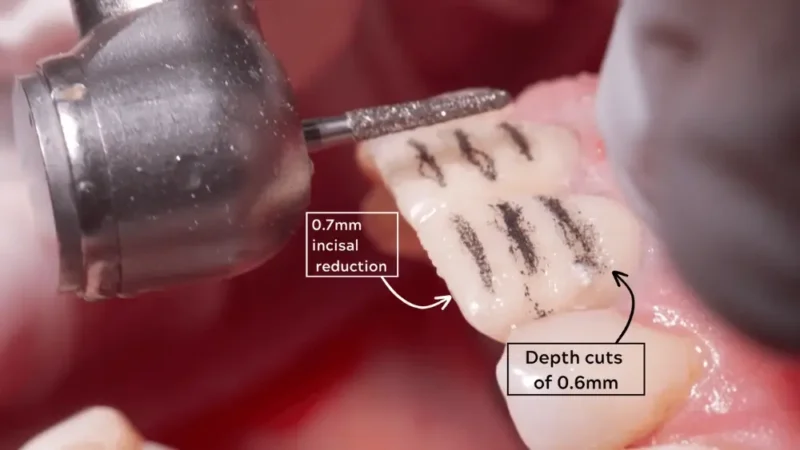
We use facial photographs and digital scans to plan the veneers in relation to your face, gums, and bite. Preserving tooth enamel is our main priority, all while ensuring reliable adhesive bonding. Local anesthesia is used when needed.
The digital smile design considers:
Our contracted laboratory uses the clinical records to produce the emax veneers. The selected product is recorded in your treatment documentation, distinguishing genuine IPS e.max from other lithium disilicate ceramics.
The technician refines the contours, shade, translucency, and surface texture. Characterization, glazing, and polishing complete the restoration, with additional ceramic layering where the design requires it.
We check the fit, margins, contacts, and appearance before bonding. This is your opportunity to discuss shade, shape, and length. Feedback from temporaries is valuable. Tell us about changes in speech, difficulty cleaning, or uncomfortable biting contacts so these can be assessed.
Emax veneers rely on adhesive bonding to connect the ceramic to the supporting tooth. Clean surfaces, moisture control, and correct material conditioning are essential to this process.
The average cost of emax veneers in Turkey ranges from £150–£350 per unit. In a discounted bundle, this means a full set of emax veneers in Turkey costs an average £2,400 to £7,000.
Cosmetic veneers are often excluded from dental insurance; confirm any eligibility directly with your insurer before proceeding.
Country | Price per veneer | Full mouth (16–20 veneers) |
Turkey | £150–£350 ($200–$465) | £2,400–£7,000 ($3,200–$9,300) |
United Kingdom | £800–£1,200 | £12,800–£24,000 |
Canada | CAD 1,000–2,500 | CAD 16,000–50,000 |
USA | $900–$2,500 | $14,400–$50,000 |
Prices are indicative, not national averages. Materials, treatment complexity, and included services differ.
At One Life Dental, every Emax veneer is made from genuine IPS e.max material sourced from Ivoclar. You don’t have to take our word for it. We record the material used for each veneer so you can confirm it.
Your verification pack includes:
The majority of patients plan for approximately 5–7 days in Turkey for Emax veneers. The stay accommodates examination, preparation, laboratory work, try-in, bonding, and final checks. However, appointment numbers and spacing vary with the treatment.
Stage | Purpose |
Initial assessment | Confirm oral health, suitability, and the treatment plan |
Preparation and records | Create the required space and record the teeth |
Laboratory production | Manufacture and finish the veneers |
Try-in and placement | Assess the restorations and complete bonding |
Final review | Check comfort and biting contacts; make necessary adjustments |
Preliminary dental treatment, gum concerns, design changes, or laboratory revisions can extend the timetable or require a separate visit.
A well-designed Emax veneer blends shade, light transmission and opacity to mask the underlying tooth.
IPS e.max CAD has a flexural strength of 530 MPa after crystallization. Flexural strength measures resistance to fracture under bending in a laboratory test. It helps describe the ceramic, but does not predict the breaking force or lifespan of an individual veneer.
Material | Strength | Visuals |
Porcelain | Lower flexural strength than emax | Detailed control of translucency |
IPS e.max Press | Lithium disilicate reinforcement | Available in several translucency and opacities |
IPS e.max CAD | 530 MPa mean biaxial flexural strength, reported by Ivoclar | Available in several translucency and opacities |
Performance depends on the supporting tooth and bonding as well as the ceramic. A stronger laboratory specimen does not automatically translate into a longer-lasting restoration.
Lithium disilicate veneers can remain functional for many years. A systematic review and meta-analysis reported a pooled survival estimate of approximately 96.8% at a long-term observation point of 10.4 years.
This figure describes restorations across clinical studies. It does not establish an expiry date or guarantee an individual outcome.
Survival means the restoration remains in service. Complication-free success means it remains functional without the complications defined by the study. A veneer can survive while still requiring maintenance.
Preparation creates space for the ceramic while preserving healthy tooth structure. Preserving enamel is a priority because it provides a reliable surface for adhesive bonding. The preparation plan must balance this objective with enough space for thickness and contours.
Minimal-prep treatment limits tooth reduction. No-prep treatment describes selected additive cases where conventional reduction can be avoided. Consider that any enamel removed is permanently lost.
These approaches depend on the starting tooth position and available space. Adding ceramic without sufficient room can produce bulky teeth.
Yes, Emax veneers are a specific type of porcelain or ceramic veneers, made from a high-strength material called lithium disilicate glass-ceramic.
Key differences from porcelain (feldspathic) veneers:
Emax veneers suit selected teeth where the main treatment goal is an appearance change and the supporting tooth structure, gums, and bite permit a bonded ceramic restoration.
Concern | What veneers can change | Clinical limit |
Discoloration | Cover selected stains and change visible shade | Dark teeth require careful opacity and thickness selection |
Small chips | Recreate an edge or refine its outline | Extensive damage needs a structural assessment |
Narrow or irregular teeth | Adjust visible width, length, and proportions | Contours must remain compatible with gum health and function |
Selected gaps | Increase tooth width to reduce visible spaces | Larger spaces can require orthodontics or combined treatment |
Minor positioning irregularities | Create a more even-looking surface | Veneers do not move roots or correct jaw relationships |
The number of veneers follows the treatment need. One restoration can address an isolated concern; several can create a coordinated change across visible teeth. Each tooth included in the plan needs a clear reason for treatment.
Emax veneers change the visible tooth surface; they cannot compensate for untreated disease, inadequate tooth support, or an unfavorable bite. Active decay and gum disease need treatment first. Severe crowding or significant bite problems can require orthodontics, while extensively damaged teeth may need a different restoration.
Heavy grinding and limited remaining enamel also require careful assessment. Choosing a strong ceramic does not remove these risks.
We select treatment tooth by tooth. A well-planned smile can combine veneers with whitening, bonding, orthodontics, or restorative care—depending on what each tooth needs.
The best starting point is the problem being treated. A color concern, a small chip, and a weakened tooth have different treatment needs.
Option | Main role | Main consideration |
Emax veneers | Ceramic changes to visible tooth surfaces | Enamel, restoration design, and bonding influence performance |
Feldspathic porcelain veneers | Individually crafted ceramic esthetics | Material and design must suit the tooth and intended change |
Composite bonding | Limited additions, repairs, and reshaping | Easier to repair in many situations, with different wear and maintenance needs |
Dental crowns | More extensive restoration of damaged teeth | Greater coverage and generally more tooth preparation |
Orthodontics | Correct tooth position | Changes alignment rather than covering its appearance |
Whitening | Lighten natural tooth color | Does not alter shape or whiten ceramic restorations |
Long-term studies support lithium disilicate as an established veneer material. Other ceramics also have favorable clinical evidence. Material selection works alongside tooth preservation, restoration design, and careful execution.
Ceramic veneers are durable restorations, but they are not maintenance-free. Problems can affect the veneer, its bond, or the supporting tooth and gums.
Potential issue | What it involves | Response |
Sensitivity | Discomfort after preparation or bonding | Persistent or worsening symptoms need assessment |
Chipping or fracture | Damage to the ceramic | Polishing, repair, or replacement depends on the damage |
Debonding | A veneer loosens or detaches | Examine the restoration and tooth before deciding on rebonding |
Decay | A cavity develops in the supporting tooth | Prevention and treatment remain necessary |
Gum problems | Inflammation, recession, or difficult cleaning | Assess tissues, contours, margins, and hygiene |
Bite discomfort | Uneven or painful contacts | Check the bite and adjust where indicated |
Further treatment | Changes in the veneer or supporting tooth | Replacement or additional dental treatment can be necessary |
Ceramic shade cannot be predictably lightened through tooth whitening. Future replacement also requires reassessment because the supporting tooth or gum position can change over time.
Occasionally, a tooth needs root canal treatment following restorative care. Discuss existing symptoms and tooth history during planning.
Report problems early. Never use household adhesive to reattach a veneer or attempt to adjust it yourself.
Brush twice daily with fluoride toothpaste and clean between your teeth every day. Ceramic does not develop decay, but the natural tooth beneath and around it remains vulnerable.
Avoid biting ice, pens, fingernails, and packaging. If a protective appliance is prescribed for grinding or clenching, use it as directed and have its fit reviewed.
Attend examinations at intervals based on your dental needs. Reviews assess the restoration margins, gums, biting contacts, and signs of wear or damage.
After returning home, retain your treatment summary and material details. Continue local dental care and contact our team if a concern develops. Remote communication helps coordinate follow-up; some problems require an in-person examination.
Significant pain, swelling, or injury needs prompt local assessment. Your written terms explain any applicable warranty and arrangements for remedial care.