
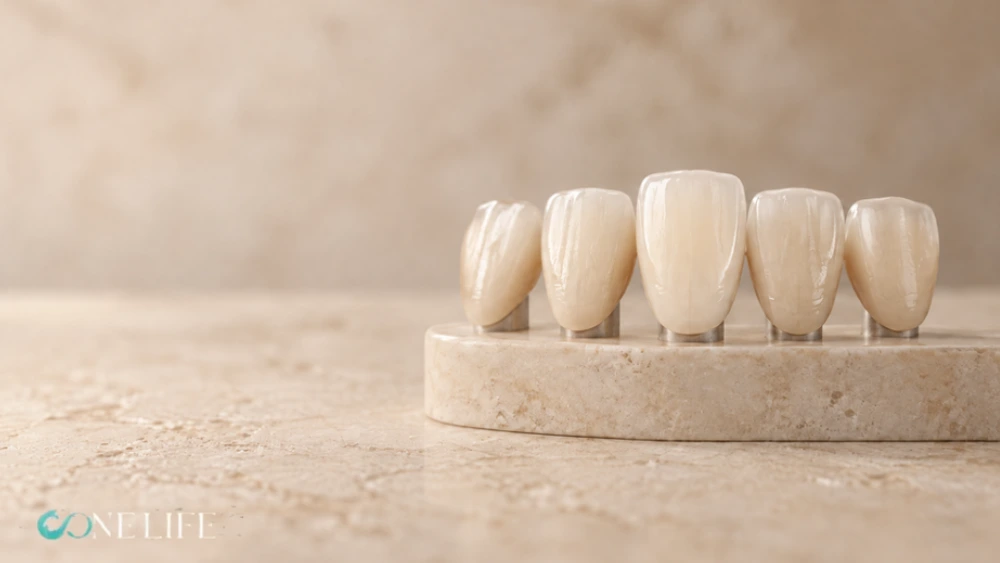
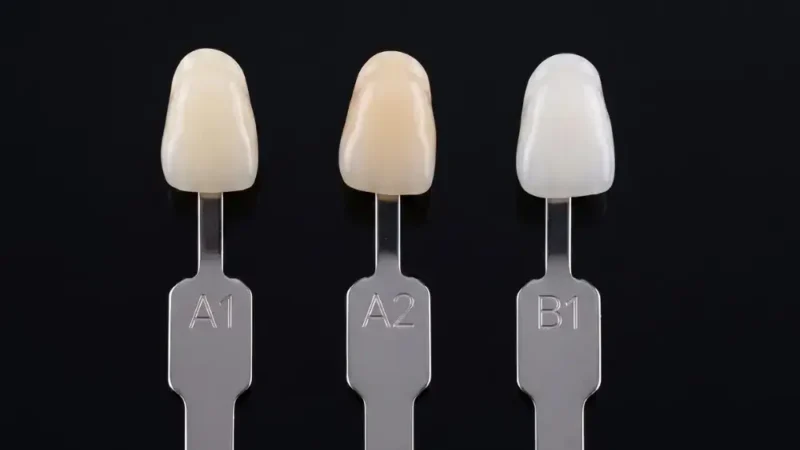
The A1 tooth shade is a light white color within the VITA Classical A1–D4 tooth shade guide. Online images cannot reproduce it reliably. The warmth of A1 is usually delicate, and camera exposure and surrounding colors can make it appear different from one photograph to another.
In this guide, we will disclose all details about the A1 shade, what influences its appearance and how to choose it. Usually, the A1 hue is used when selecting for:
- Dental veneers
- Dental crowns
- Dentures
- Composite bonding
- Teeth whitening
What is the A1 tooth shade?
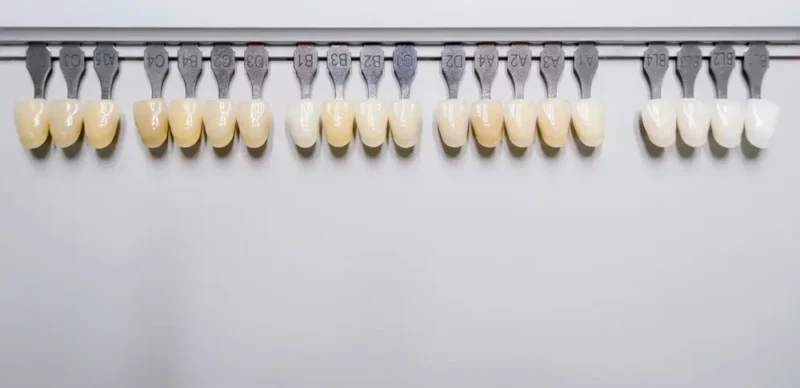
A1 is is a bright ivory white with gentle warmth, not a flat, opaque paper-white color. It is one of the 16 shades in the VITA Classical A1–D4 tooth shade guide, a system for evaluating and communicating tooth color.
The guide organizes shades into four general color families:
Shade family | General color tendency |
A | Reddish-brownish |
B | Reddish-yellowish |
C | Grayish |
D | Reddish-grayish |
These descriptions refer to subtle undertones, not teeth that appear visibly red, brown or gray. A1 should not be interpreted as a universal paint code. Physical shade tabs and ceramic systems may reproduce it somewhat differently.
Does the A1 shade look natural?
Yes. A1 can produce a noticeably white smile without the intensity of bleach shades. A1 is not inherently too white. Whether it looks subtle depends on how it is used.
A1 may blend naturally when:
- The neighboring teeth are already relatively light.
- Professional whitening has created a similar surrounding shade.
- Several visible teeth are being restored together.
- The ceramic has realistic translucency and surface texture.
- The patient wants a bright but understated result.
What determines the look of the A1 tooth shade?
The shade is only one part of the final appearance. Let’s now look at the deeper details determining the a1 tooth shade’s exact color.
1. Translucency
Natural enamel allows light to pass through and reflect from the dentin beneath it. A translucent restoration can create realistic depth, while an excessively opaque one may look flat even when its basic shade is correct.
2. Underlying tooth color
Thin veneers and translucent restorations may allow the original tooth color to influence the result. A dark, heavily restored or discolored tooth can make an A1 veneer appear deeper than expected unless the material and preparation are planned accordingly.
3. Material and thickness
Composite resin, zirconia, lithium disilicate and layered porcelain do not reflect light identically. A1 in one material may therefore differ slightly from A1 in another. Ceramic thickness and the shade of the resin cement can also affect thin restorations.
4. Surface texture and gloss
Smooth, highly polished surfaces reflect more light and may appear brighter. Natural microtexture scatters light differently and can make a restoration blend more realistically.
5. Lighting and surrounding colors
Daylight, clinical lamps and indoor lighting can alter perceived color. Makeup, clothing, lips, gums and neighboring teeth can also influence how warm or bright A1 appears through visual contrast.
Dental uses of the A1 shade
A1 is used across several dental treatments. Its role, and how easily it can be achieved, varies from one to another.
A1 as a Whitening Goal
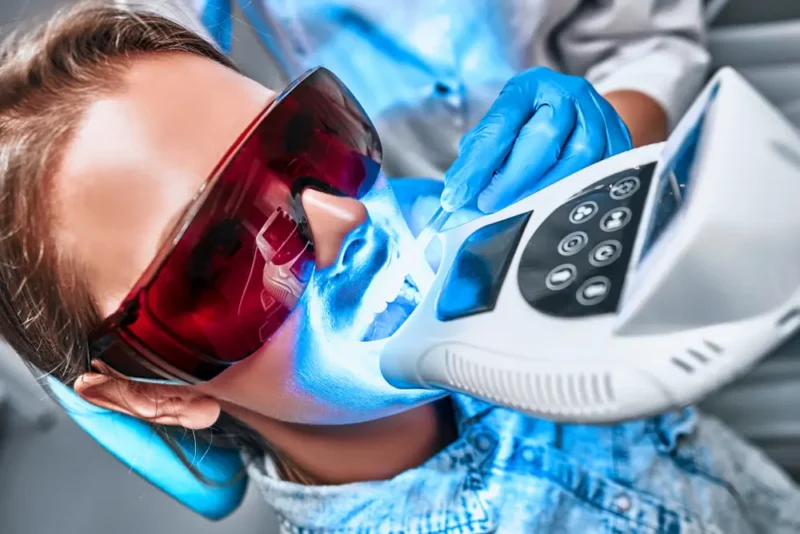
In teeth whitening, A1 is often a reference point. Dentists record the starting shade, then compare the results with the shade guide after treatment. For many patients, A1 represents a bright yet natural target.
- Shade tabs help document progress before and after whitening
- Existing crowns, veneers and fillings will not lighten
- Whitening should be completed before new restorations are matched
- The final shade may be lighter than, close to or darker than A1
A1 for Dental Veneers
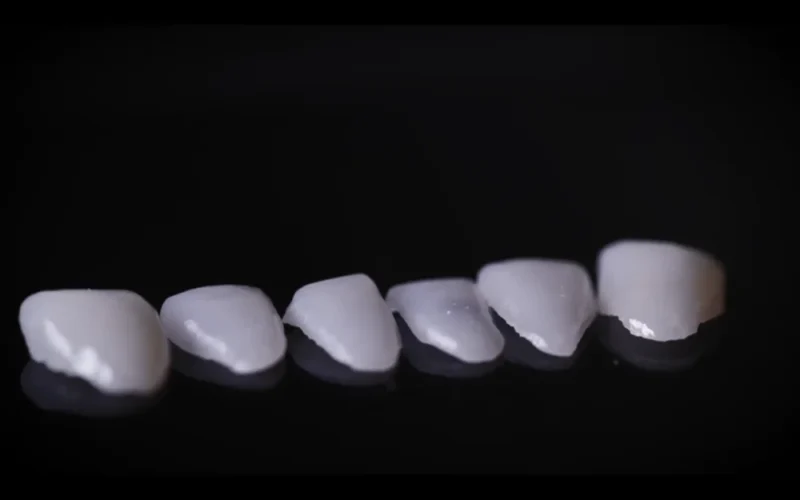
A1 is a popular choice for porcelain and composite veneers. Because veneers are thin, the final color depends on the underlying tooth, the cement shade and the ceramic’s translucency.
- Suits patients seeking a bright but believable smile makeover
- Discolored teeth may need more opaque ceramic or additional preparation
- Try-in pastes help preview how the cement affects the final shade
- Works best when veneers are planned alongside neighboring teeth
A1 for Dental Crowns
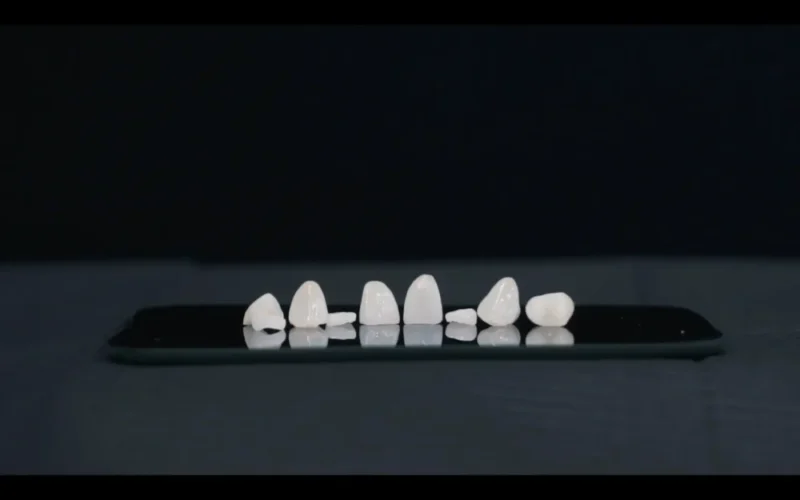
Dental crowns cover the entire tooth, so they give more control over the final color. A1 is often selected for front crowns when neighboring teeth are light or have been whitened. For a single crown, the shade must blend with the surrounding teeth.
- Zirconia, lithium disilicate and layered porcelain reproduce A1 differently
- A single front crown is one of the most demanding shade-matching cases
- Laboratories may blend A1 with other shades across different tooth zones
- A crown’s color cannot be changed with whitening once it is placed
A1 for Dentures
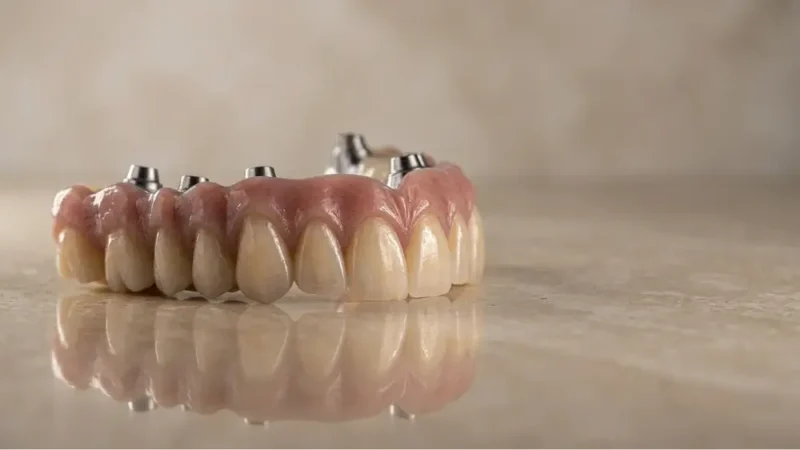
For full or partial dentures, A1 can give a fresh, youthful appearance. Because full dentures replace all visible teeth, there is no natural tooth to match, which gives patients more freedom to choose.
- Partial dentures must blend with the remaining natural teeth
- Denture teeth are usually made of acrylic resin or composite
- The gum-colored base and tooth arrangement also shape the overall look
- Patients can preview the shade during a wax try-in
A1 for Composite Bonding
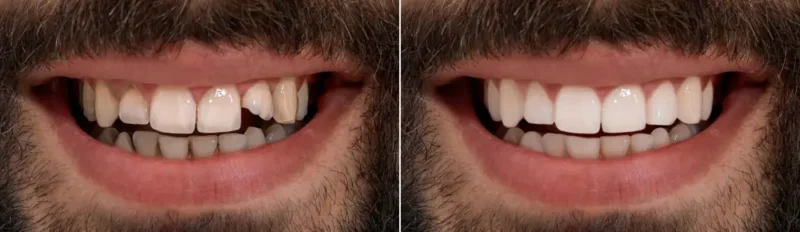
Composite bonding uses tooth-colored resin to repair chips, close gaps or reshape teeth. A1 composite is widely available and frequently used on lighter front teeth. Dentists may layer an A1 body shade with enamel and translucent composites to imitate natural depth.
- Composite shades vary between manufacturers, even when labeled A1
- Resin may stain or lose its polish more readily than ceramic
- Regular professional polishing helps maintain the original brightness
A1 for Dental Bridges
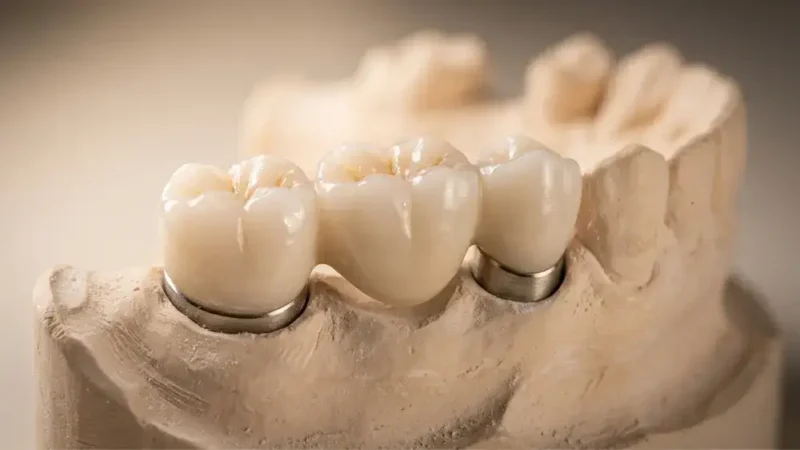
A dental bridge replaces one or more missing teeth using crowns placed on neighboring teeth or implants. A1 can suit bridges in bright smiles, but the laboratory usually adds subtle color variation so the replacement teeth do not look like one uniform block.
- The artificial tooth should match the teeth on either side
- Replacement teeth near the gums may need gingival shading
- Material choice affects both strength and translucency
- Photographs and shade maps help the lab reproduce individual characteristics
A1 for Implant Restorations
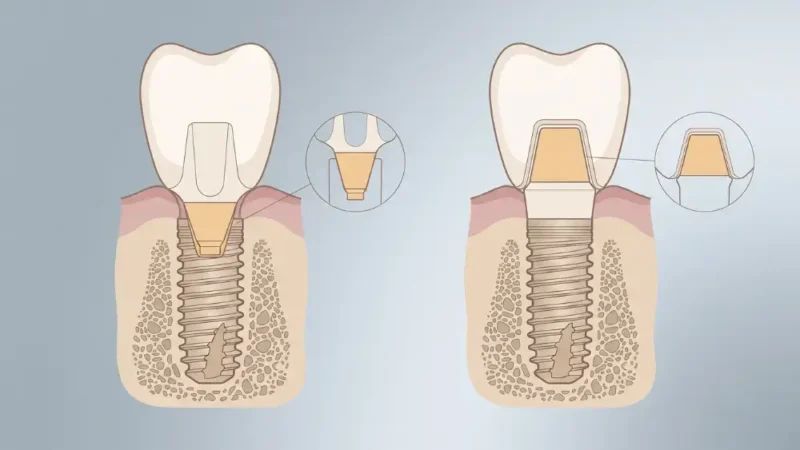
A dental implant is topped with a crown, bridge or denture, and each of these can be made in A1. Shade selection follows the same principles as for conventional crowns. However, a titanium dental implant abutment may create a grayish shadow through thin gums, so zirconia or tooth-colored abutments are sometimes used in the front of the mouth.
- Match the shade to neighboring teeth, not to the shade guide alone
- Abutment material can affect color near the gumline
- Complete any whitening before the final implant crown is made
- Multiple implants in the same arch should be shade-planned together
Is A1 the right shade for your smile?
A1 is a bright, softly warm ivory shade that can create a natural-looking result in whitening, veneers or crowns. However, a professional assessment is necessary to evaluate how the final result might be affected by:
- Material (zirconia, emax, porcelain, composite)
- Underlying color
- Surrounding teeth
How do dentists select an A1 dental shade?
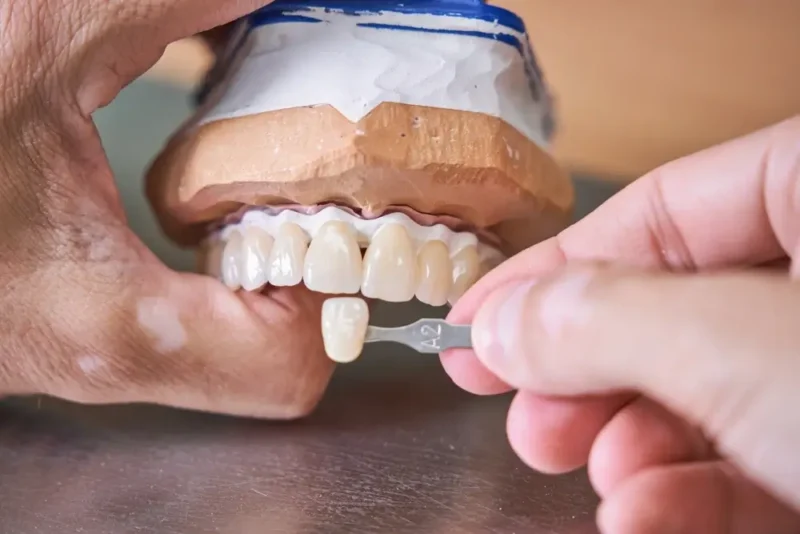
At One Life Dental, shade selection begins with a comparison between the natural teeth and the VITA shade guide. Our doctors evaluate considering brightness, color intensity and undertone.
Depending on the treatment, the process may include:
- Cleaning surface stains that could distort the assessment.
- Comparing A1 with neighboring shades.
- Viewing the tooth shade tabs under more than one light source.
- Assessing different areas of the tooth.
- Taking standardized clinical photographs.
- Using a spectrophotometer or digital shade device.
- Sending photographs and a color map to the dental laboratory.
- Evaluating try-in materials.
Common mistakes when choosing A1
Careful planning helps prevent a light shade from becoming a mismatched or artificial-looking result.
Common errors include:
- Selecting A1 from an edited online photograph.
- Assuming A1 looks identical in every material.
- Choosing the shade after the teeth have dehydrated.
- Whitening natural teeth after completing permanent restorations.
- Treating A1 as evidence of better dental health.
- Making every restored tooth completely uniform and opaque.
- Ignoring the color of untreated lower or neighboring teeth.
What skin tone does A1 suit?
A1 can look attractive with many different complexions, but skin tone alone should not determine dental shade.
The apparent relationship between teeth and skin is affected by facial contrast, lip color, gum shade, lighting and the amount of tooth visible. Research has not established a universal rule pairing A1 with a specific complexion.
Instead of following a rigid skin-tone chart, patients can view physical shade samples beside their face and evaluate provisional restorations when available. Personal preference should be considered alongside clinical and technical limitations.
Can teeth whitening achieve A1?
Professional whitening may help some natural teeth reach or approach A1, but the outcome cannot be guaranteed. After treatment, the result may be close to A1, lighter than A1 or unable to reach it. Shade tabs cannot predict an identical biological response for every patient.
Results depend on:
- Starting shade
- Cause and depth of discoloration
- Enamel thickness and translucency
- Age-related changes
- Previous dental treatment
- Individual response to the whitening agent
Can natural teeth be A1?
Yes. Some people naturally have teeth close to A1. However, a natural smile rarely consists of every tooth matching one shade perfectly. Even individual teeth display several color zones. Color may also change with age as enamel becomes thinner and the dentin underneath becomes more visible.