
Misaligned teeth do not meet when the mouth closes. Dentists call this malocclusion. A small amount is normal – very few people have a textbook-perfect bite. But sometimes, misaligned teeth can affect biting, chewing, cleaning or the way pressure is distributed across the teeth, leading to future cascading problems.
A professional assessment establishes whether a bite difference is simply an individual characteristic or a condition that could benefit from care.
What causes misaligned teeth?
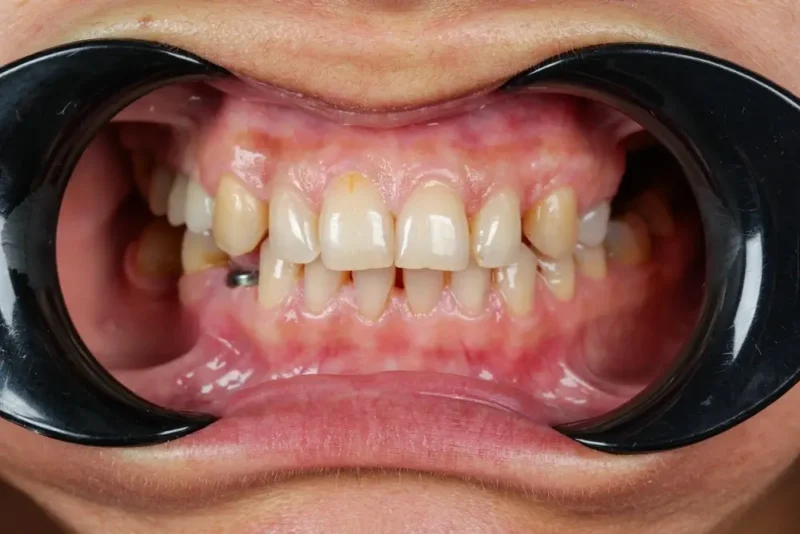
Genetics influence jaw size, position and facial growth. Different upper and lower jaw growth may produce an overbite, underbite or asymmetry.
Prolonged thumb sucking, extended dummy or pacifier use, tongue thrusting and certain mouth-breathing patterns can also influence a developing bite. Missing or impacted teeth, injury, gum disease, tooth loss or poorly fitting restorations can alter dental contact too.
Not every case can be prevented. Early dental reviews can nevertheless identify changes that require monitoring and habits that may be affecting development.
What are the main types of malocclusion?
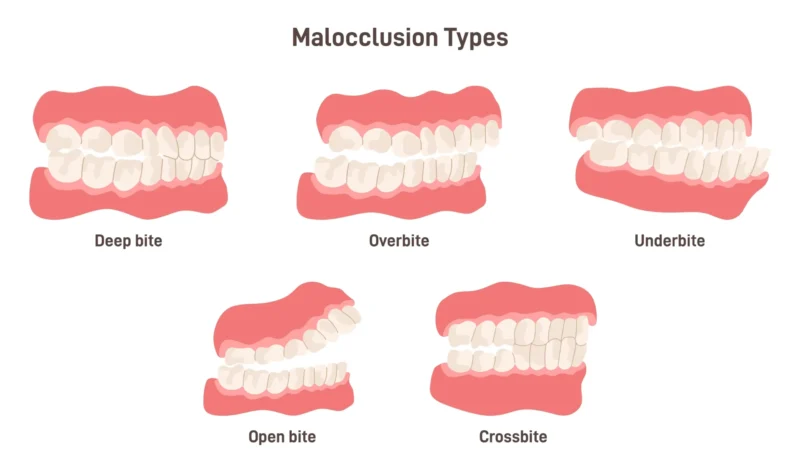
Teeth misalignment can describe more than tooth irregularity. Teeth may look straight yet meet incorrectly when the person bites; visibly irregular teeth may also exist without a jaw problem.
The table below explains the principal patterns.
Type | What happens when the teeth close? | Possible concerns |
Overbite or deep bite | Upper front teeth cover too much of the lower front teeth vertically | Tooth wear or contact with gum tissue |
Overjet | Upper front teeth project too far forwards horizontally | Greater risk of injury and difficulty closing the lips |
Underbite | Lower front teeth sit in front of the upper front teeth | Biting difficulty, uneven wear or jaw imbalance |
Crossbite | One or more upper teeth sit inside the lower teeth | Uneven pressure, wear or a sideways shift when closing |
Open bite | Some upper and lower teeth do not touch | Difficulty biting foods, chewing or producing some sounds |
Dental midline discrepancy | Centres of the upper and lower front teeth do not correspond | May indicate tooth displacement or jaw asymmetry |
Overbite versus overjet
Overbite and overjet are frequently confused.
Overbite describes the vertical overlap of the upper front teeth over the lower front teeth. A small vertical overlap is normal; a deep bite occurs when the overlap is excessive and may allow teeth to contact the gum or palate.
Overjet is a horizontal measurement. It describes how far the upper front teeth project ahead of the lower front teeth. Someone may have a deep overbite, increased overjet or both. The distinction matters because each problem can require a different treatment plan.
What symptoms can a misaligned bite cause?
Many people notice appearance first, but symptoms can also be functional. However, many of these symptoms are not specific to malocclusion. Jaw pain, headaches or clicking joints have several possible causes, so a bite problem should not automatically be blamed without examination.
Possible signs include:
- difficulty biting into or chewing certain foods;
- repeatedly biting the cheeks, lips or tongue;
- uneven or premature tooth wear;
- chipped teeth or sensitivity from concentrated pressure;
- difficulty cleaning areas where teeth meet awkwardly;
- speech changes in selected cases; and
- strain or fatigue while chewing.
How are misaligned teeth diagnosed?
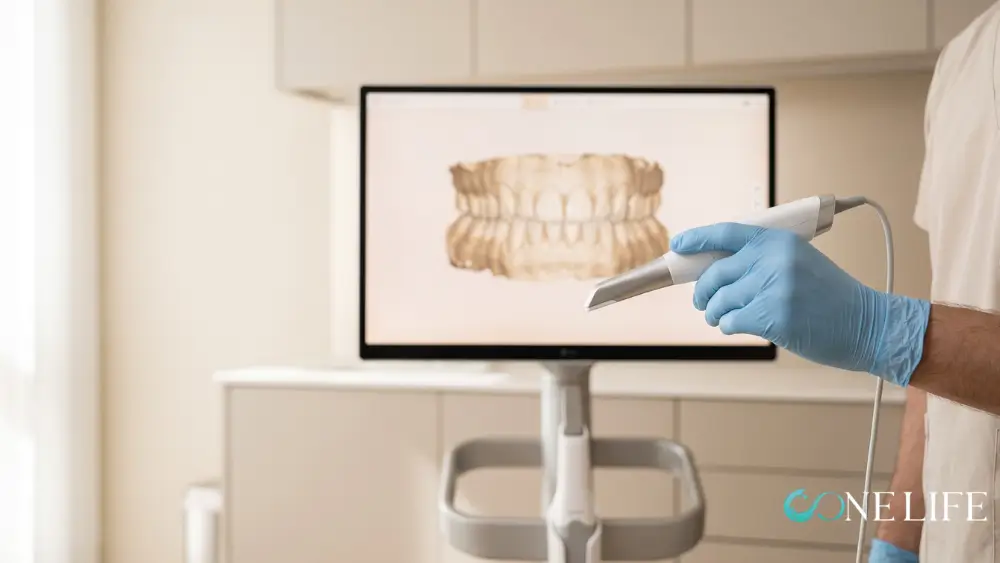
A dentist or orthodontist examines the teeth while the mouth is open and closed, checking tooth contact, jaw movement, symmetry and available space. Records may include photographs, digital scans or impressions and dental X-rays. In selected cases, a side-view cephalometric X-ray helps evaluate the relationship between the teeth, jaws and facial bones.
The diagnosis considers whether the problem is mainly dental, mainly skeletal or a combination. It also evaluates tooth and gum health, facial growth, previous dental work and the patient’s priorities. This information is essential because the same appliance is not suitable for every type of misaligned bite.
A digital orthodontic assessment can provide the records needed for personalised planning.
How to fix misaligned teeth
Patients comparing appliances can review fixed braces, clear aligner treatment and orthognathic treatment before discussing suitability with a clinical team. Treatment is selected according to the type and severity of malocclusion, age, growth, oral health and patient cooperation.
- Fixed braces: Brackets and wires provide precise control and can treat many dental and bite relationships.
- Clear aligners: Removable trays can correct selected mild, moderate and complex cases. Consistent wear is essential, and attachments or elastics may be required.
- Growth-modifying appliances: In growing patients, certain appliances may help guide jaw development or improve the relationship between the arches. Timing is particularly important.
- Elastics and auxiliary devices: These may be used with braces or aligners to change how the upper and lower teeth meet.
- Restorative or periodontal care: Missing teeth, damaged restorations or gum disease may require coordinated treatment before, during or after orthodontics.
- Orthognathic surgery: When a major adult jaw discrepancy cannot be corrected with tooth movement alone, combined orthodontic treatment and jaw surgery may be considered.
What is the best age to treat malocclusion?
The ideal time depends on the problem. An orthodontic check around age seven can reveal developing crossbites, abnormal jaw or eruption concerns. Early assessment does not mean every child needs immediate treatment; monitoring is often enough.
Treatment commonly begins after many adult teeth have erupted, often between approximately 10 and 14. Adults can also receive treatment, provided their teeth and gums are sufficiently healthy.
Parents can also arrange a child orthodontic consultation, while older patients can explore adult bite correction.
A Faster Cosmetic Option for Adults
Adults who want to improve the appearance of uneven teeth within a limited period may consider cosmetic dentistry. Tooth-coloured restorations can alter the proportions, surfaces and contact points of teeth, creating a straighter and more harmonious-looking smile in a single seating.
Nevertheless, changing the visible tooth shape does not reposition the jaws or correct every form of teeth misalignment. Patients with a significant overbite, underbite, crossbite or open bite need a complete functional assessment to establish whether restorative care, orthodontics or a combination of treatments would provide the safest and most predictable result.
What does scientific evidence say?
The US National Library of Medicine’s MedlinePlus describes malocclusion as the relationship between tooth alignment and the way the upper and lower teeth fit together. A systematic review indexed in PubMed found substantial variation in bite patterns across populations and stages of dental development. The independent German Institute for Quality and Efficiency in Health Care provides an evidence-based overview through NCBI Bookshelf, explaining that severity ranges from harmless variation to problems affecting eating, speech or dental tissues. NHS guidance confirms that braces may be recommended when the jaws do not meet properly or tooth position makes chewing and cleaning difficult.