
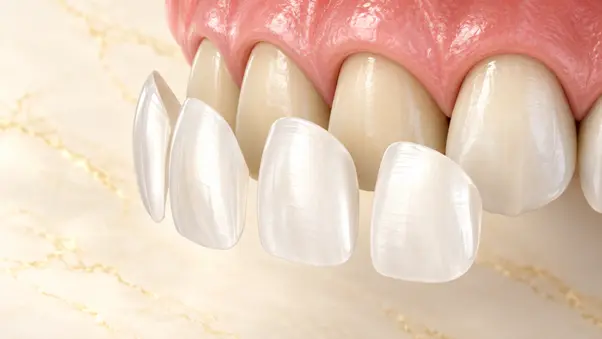
Porcelain veneers are thin ceramics bonded to the front surfaces of teeth. They can conceal discolouration, restore small chips and close gaps, usually with less tooth reduction than a full-coverage crown.
The main decision is whether those changes justify altering the teeth. Someone who likes their tooth shape but wants a lighter smile might only need whitening. When tooth position is the main concern, orthodontic treatment may offer a more conservative solution.
Veneers also involve a commitment beyond the initial treatment. Understanding preparation, maintenance and eventual replacement helps you decide whether they suit your goals.
What can porcelain veneers change?
A veneer covers the visible surface of an existing tooth and sometimes extends over its biting edge. It changes the tooth’s appearance without replacing its root.
Dentists use porcelain veneers to address:
• Discolouration that does not respond sufficiently to whitening.
• Small chips and selected areas of wear.
• Uneven tooth shapes or proportions.
• Small gaps between teeth.
• Certain developmental enamel defects.
• Minor positional irregularities that can be corrected without excessive preparation.
For example, a veneer can make a small, narrow tooth appear more proportionate beside its neighbours. It cannot move the tooth’s root or correct a substantial bite problem.
Veneers do not replace missing teeth or treat active decay. Those problems require separate treatment before cosmetic work begins.
Types of porcelain veneers
“Porcelain veneers” is commonly used as a broad term for ceramic veneers. The exact material matters because ceramics differ in strength, translucency and fabrication.
Feldspathic porcelain
Feldspathic porcelain allows a dental technician to build subtle variations in colour, translucency and surface texture. It can produce thin restorations that blend with neighbouring teeth.
Its lower strength compared with reinforced glass-ceramics makes support from the tooth and careful adhesive bonding particularly important.
Lithium disilicate
Lithium disilicate is a reinforced glass-ceramic used for veneers and other dental restorations. IPS e.max is a well-known product system within this category.
It combines aesthetic versatility with higher mechanical strength than conventional feldspathic porcelain. Veneers can be pressed or milled, according to the selected product and laboratory technique.
Stronger ceramic does not make a veneer unbreakable. Tooth preparation, bonding and bite forces still influence its performance.
Minimal-preparation and no-preparation veneers
These terms describe how much tooth reshaping is involved, rather than a separate material.
Adding ceramic with little or no preparation can suit teeth that need extra volume. However, adding the same thickness to teeth that already project forwards could make them look bulky.
No-preparation veneers are therefore unsuitable for some smiles. They should not be assumed to be completely reversible or removable without affecting the underlying tooth.
Who is suitable for porcelain veneers?
Healthy gums, adequate tooth structure and a manageable bite provide the starting point. The dentist also checks existing fillings, enamel availability and the reasons for wanting treatment.
Veneers generally bond more predictably to enamel than to dentine, the layer beneath it. Preserving enamel helps create a reliable bond. Teeth with large fillings or substantial enamel loss need closer evaluation because less enamel may remain available.
Grinding, clenching and heavy bite contacts increase the forces placed on restorations. A protective appliance may be recommended, although it cannot eliminate every risk.
Active gum disease and decay need treatment first. A heavily damaged tooth may need a different restoration, while significant crowding may be better managed with orthodontics.
How much do porcelain veneers cost?
Porcelain veneers are usually priced per tooth. The total reflects the number of restorations, the material, laboratory work and any treatment needed beforehand.
Matching a single front tooth can involve detailed shade selection and ceramic layering. One veneer is therefore not necessarily a simpler job than several veneers designed together.
What should a quotation include?
A useful quotation explains what you are paying for, rather than providing only a headline figure.
Item What to clarify
Examination and diagnostics Whether consultations, scans and necessary radiographs are included
Smile planning Whether a wax-up, digital design or physical mock-up is included
Preparatory treatment Whether whitening, gum treatment or replacement fillings cost extra
Veneers The ceramic, number of teeth and laboratory fabrication
Temporary restorations Whether they are needed and included
Reviews Which follow-up appointments are covered
Repairs and replacement The terms, exclusions and possible future charges
“Full set” has no fixed clinical meaning. It might describe six upper veneers, ten upper veneers or treatment across both arches. Ask which teeth are included and why each one needs treatment.
Comparing treatment costs abroad
Compare equivalent treatments. A composite veneer, porcelain laminate veneer and full-coverage crown are different restorations, even when advertisements use similar language.
Travel and accommodation also affect the budget. Establish who will provide follow-up care, whether a return visit could be necessary and who pays for additional treatment.
A quotation for eight veneers tells you the initial treatment fee. It does not necessarily include future repairs, replacement or travel if a veneer detaches.
The porcelain veneer procedure
Treatment usually involves planning, tooth preparation, laboratory fabrication and bonding. Appointment schedules vary, particularly when other dental work is needed first.
1. Examination and planning
The dentist examines the teeth, gums, existing restorations and bite. Photographs, scans, impressions and radiographs are taken where needed.
Discuss specific changes rather than asking only for a “better smile”. You might want a chipped edge restored, two uneven teeth balanced or a darker tooth matched to its neighbours.
A wax-up or digital design can demonstrate the proposed changes. A physical mock-up may also let you assess tooth length, shape and speech before definitive preparation.
2. Tooth preparation
Where necessary, the dentist removes a controlled amount of tooth structure to create space for the ceramic.
There is no single preparation depth suitable for every tooth. Tooth position, existing fillings, the chosen ceramic and the amount of colour change all affect the design.
Local anaesthesia can control discomfort during preparation when needed.
3. Impressions and fabrication
A digital scan or conventional impression records the prepared teeth. The laboratory also receives details about the bite, target shade and underlying tooth colour.
Temporary veneers may protect prepared surfaces and maintain appearance while the final restorations are made. Follow the dentist’s cleaning and eating instructions during this stage.
4. Try-in and bonding
Before bonding, the dentist checks fit, appearance, contacts and the relationship between the veneers and gums.
This is the time to discuss concerns about colour or shape. Changes become more difficult once the restorations are bonded.
The tooth and ceramic receive material-specific surface treatments, and adhesive resin cement secures the veneers. The dentist removes excess cement, finishes the margins and checks the bite.
Porcelain veneers before and after: what to expect
Veneers can alter visible colour, shape, edge position and proportions. The starting condition of the teeth determines how much change is possible.
Creating a natural appearance
Natural teeth are not uniformly white or identical in shape. Subtle differences in translucency, texture and contour help veneers blend into a smile.
The underlying tooth colour also matters. A very thin, translucent veneer may not hide a severely darkened tooth. Masking that colour can require a different ceramic opacity or treatment approach.
Choosing the whitest shade is therefore not the only aesthetic decision. The result should also work with untreated teeth, lip movement and facial proportions.
Understanding before-and-after photographs
Photographs are more informative when lighting, camera angles and image processing are comparable. Look for examples with starting conditions similar to your own.
A photograph cannot show preparation depth, bonding quality or long-term gum health. An attractive image should support a treatment discussion rather than replace it.
How long do porcelain veneers last?
Porcelain veneers can remain functional for many years, but they are not lifetime restorations.
A systematic review of 25 studies involving 6,500 veneers estimated cumulative survival at approximately 95.5% after ten years. This is a pooled research estimate, not a guarantee for an individual patient. Survival also does not necessarily mean that a restoration remained free of every complication. [3]
Bonding conditions, tooth structure, grinding, oral hygiene and maintenance all influence longevity.
Veneers do not need automatic replacement after a fixed number of years. A dentist considers replacement when examination identifies a problem, such as fracture, decay, loss of bonding or an unacceptable aesthetic change.
Benefits and risks of porcelain veneers
Porcelain veneers can address several visible concerns within one restoration. Ceramics offer colour stability and stain resistance, and veneers usually cover less tooth structure than conventional crowns.
These benefits need to be weighed against permanent preparation and future maintenance.
Irreversible tooth alteration
Enamel removed during preparation does not grow back. Prepared teeth generally need continuing restorative coverage, even when the original veneers eventually require replacement.
This makes treatment a longer-term decision than simply choosing the appearance of the first set.
Sensitivity and discomfort
Sensitivity or gum tenderness can occur after treatment. Persistent, worsening or spontaneous pain needs examination.
Root canal treatment is not a routine part of getting veneers, but pulpal complications can arise, particularly in teeth with extensive preparation or previous restorative treatment.
Chipping, fracture and detachment
A veneer can chip, crack or come loose. Some small defects can be repaired, and an intact detached veneer can sometimes be rebonded. Other damage requires replacement.
The cause matters: replacing a fractured veneer without addressing an excessive bite contact may leave the same problem unresolved.
Decay and gum changes
Ceramic cannot develop decay, but the natural tooth beneath and around it can. Cleanable margins and daily plaque removal remain essential.
Gum recession may expose a restoration margin or root surface over time. Natural teeth can also change colour while the veneers retain their shade.
Whitening does not predictably lighten the ceramic itself.
Porcelain veneers versus other options
The least invasive option that achieves the desired improvement deserves consideration.
Treatment What it changes Main consideration
Porcelain veneers Visible colour, shape and proportions Often involves irreversible preparation
Composite bonding or veneers Adds or reshapes tooth-coloured resin Easier to repair, but more susceptible to wear and staining
Teeth whitening Lightens responsive natural tooth discolouration Does not change tooth shape or lighten ceramic restorations
Orthodontics Repositions teeth Addresses alignment and selected bite problems
Crowns Restores teeth needing extensive coverage Usually requires more tooth reduction
No treatment Preserves the existing teeth Reasonable when the expected benefit does not justify intervention
Sometimes treatments are combined. Whitening first, for example, may reduce the number of teeth needing restorations while helping establish a suitable shade.
Looking after porcelain veneers
Brush twice daily with fluoride toothpaste and clean between the teeth every day. Use a soft-bristled toothbrush and avoid unnecessarily abrasive products.
Do not use your teeth to open packaging or bite hard objects. Wear a protective appliance if prescribed, and attend dental reviews at the interval recommended for your oral health.
A veneer that moves, feels high or causes persistent discomfort needs attention. Changes in the bite, repeated bleeding or new sensitivity should also be checked rather than left until the next routine visit.
Frequently asked questions
Are porcelain veneers permanent?
The ceramic restorations are replaceable, but any enamel removed during preparation is permanently lost. Veneers therefore involve a long-term restorative commitment, even though an individual veneer may eventually need repair or replacement.
Is getting porcelain veneers painful?
Local anaesthesia can control discomfort during preparation. Some temporary sensitivity or gum tenderness can follow treatment. Pain that persists, worsens or starts without an obvious trigger needs assessment.
Can I have a veneer on just one tooth?
Yes, provided the tooth is suitable. Matching one veneer to neighbouring natural teeth can require detailed laboratory work. Whitening or limited composite bonding may offer a more conservative solution for some concerns.
Can I choose the colour before bonding?
You can discuss the proposed shade during planning and assess the appearance at the try-in stage. Tell the dentist about any concerns before bonding. Changing the ceramic’s colour afterwards generally requires replacing the veneer.
What should I do if a veneer comes off?
Keep the veneer in a clean container and contact a dentist promptly. Avoid biting with the affected tooth and do not use household glue to reattach it. The dentist will check the tooth and restoration to establish whether rebonding is possible.
Will veneers affect my speech?
Changes to tooth length or thickness can temporarily affect how some sounds feel. A mock-up can help identify potential issues during planning. Persistent speech difficulties should be reviewed so the dentist can check the restoration contours.
Contact OneLife Dental to discuss whether porcelain veneers suit your teeth and the changes you want to make.
Request a personalised treatment plan covering materials, preparation, costs and follow-up care.
References
- American Dental Association, MouthHealthy. Veneers.
- Cleveland Clinic. Veneers: procedure, benefits and risks.
- Alenezi A, Alsweed M, Alsidrani S, Chrcanovic BR. Long-term survival and complication rates of porcelain laminate veneers in clinical studies: a systematic review. Journal of Clinical Medicine. 2021;10(5):1074.
- General Dental Council. Going abroad for dental treatment.